
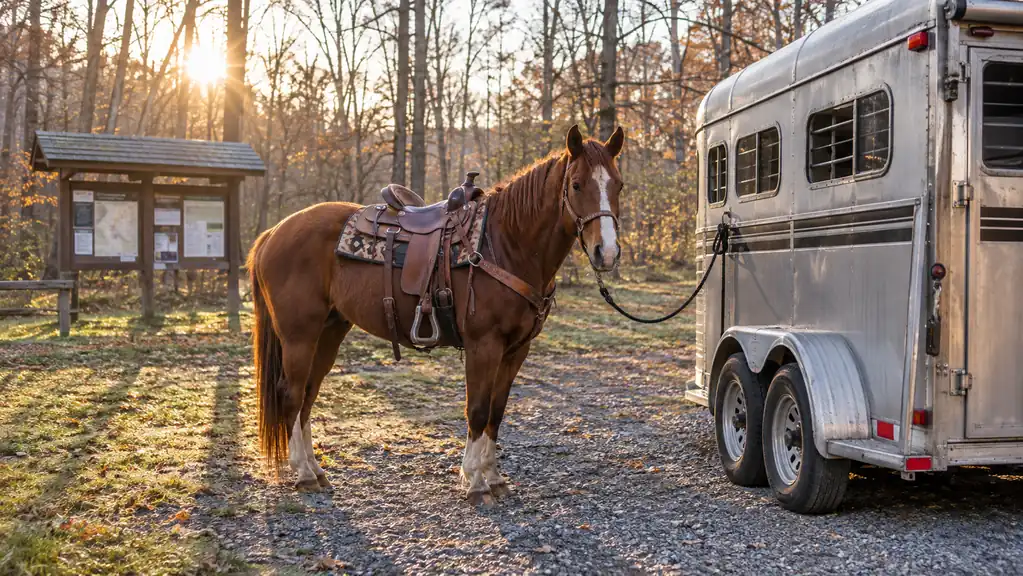
For most of my riding life I bought a halter every spring and threw it away every fall. They faded, the buckles went orange, and one of them came off in the pasture and I never did find it. In November 2024 I bought the Weaver Equine padded nylon halter in the Average Horse size and put it on Ranger, my fourteen-year-old Quarter Horse gelding, and it has been the only halter on his head for handling ever since. Two years on, a friend at the trailhead asked me why I do not just use a rope halter like her Tough1. I did not have a better answer than because this one still works, so I went and looked properly.
Here is the short answer. If your horse is caught, groomed, tied, trailered and shod in the same halter day after day, the Weaver Equine is the one I would buy again. If you are doing groundwork with a young or pushy horse, or you want a halter that sends a clear signal through a light lead, a rope halter like the Tough1 does that job better. They are not really competing for the same slot in the tack room, and once I stopped pretending they were, the choice got simple.
| Weaver Equine Nylon Halter | Tough1 Rope Halter | |
|---|---|---|
| Padding | Soft PVC-coated foam rubber liner between the nylon and the horse | Braided rope only, nothing between rope and hair |
| Hardware | Brass plated hardware with a snap closure | No metal at all, everything tied in knots |
| Holding a fit | Adjust the webbing when the horse changes weight | Retie the knots and it holds exactly where you set it |
| Feel through the lead | One inch webbing spreads the pull over a wider band | Narrow rope, so a light pull is easier for the horse to feel |
| Catching and leading in a hurry | Snap it on one-handed at the gate with a lead rope in the other hand | Slower to take on and off, and fiddly with a horse circling you |
| Fit on an average-built horse | Sized Average Horse, which is what a 15.1 hand gelding takes | Sized by rope length, and the fit is wherever you tie it |
| How it ages | Webbing fades and padding flattens, stitching still sound at two years | Rope keeps its shape but picks up dirt and stiffens with weather |
| Tying and hauling | Padding takes the sting out of the one set-back before a horse settles | Less give on a hard puller, and a fighter can sore his own poll |
| The job it is built for | Daily handling, grooming, hauling, the farrier | Groundwork and a horse that leans or drags |
How I Ended Up Comparing Two Halters
I did not set out to compare anything. I bought the Weaver Equine because the feed store halter before it had rusted hardware and a frayed cheek piece, and I was tired of buying the same thing over and over. What I wanted was boring. Something that would go on in the dark, come off with cold hands, and not leave a rub behind Ranger's ears on a long haul. Two winters and a good many trips out later, it has done all three, which is why the question caught me off guard.
Bonnie has kept her mare in a rope halter for years. At the trailer one Saturday she watched me buckle Ranger's halter and asked why I bothered with the padding and the metal when a rope halter does the same job with less in your hand. She is not wrong about the weight, and she is not wrong that a rope halter is a tidy piece of gear. She is also not doing what I do with a halter, which is lead a half-ton horse onto a trailer in the dark and then tie him to a post while I dig a hoof pick out of my coat. Different jobs, different tools.
What a Halter Has to Do on a Trail Horse
A trail horse's halter does four things and none of them are glamorous. It gets him caught in the morning. It holds him while I pick out his feet and brush the mud off his back. It ties him to the trailer while I unload and water him. Then it goes back on for the ride home. Anything past those four is a halter doing a job it was not bought for, and I have watched riders get into arguments at trailheads over gear that was never meant for the use it was getting.
What I want out of those four things is simple. It should not rub. It should not come loose on its own. It should not cost me five minutes of fiddling while the horse dances at the gate. And it should still work after a summer of sweat and a winter of wet weather, because my tack room is a corner of a pole barn and it is not climate controlled and never will be. That is the standard I am holding both halters to, and it is why the padding matters to me more than it might to somebody with a younger, quieter horse.
Where the Weaver Equine Halter Wins
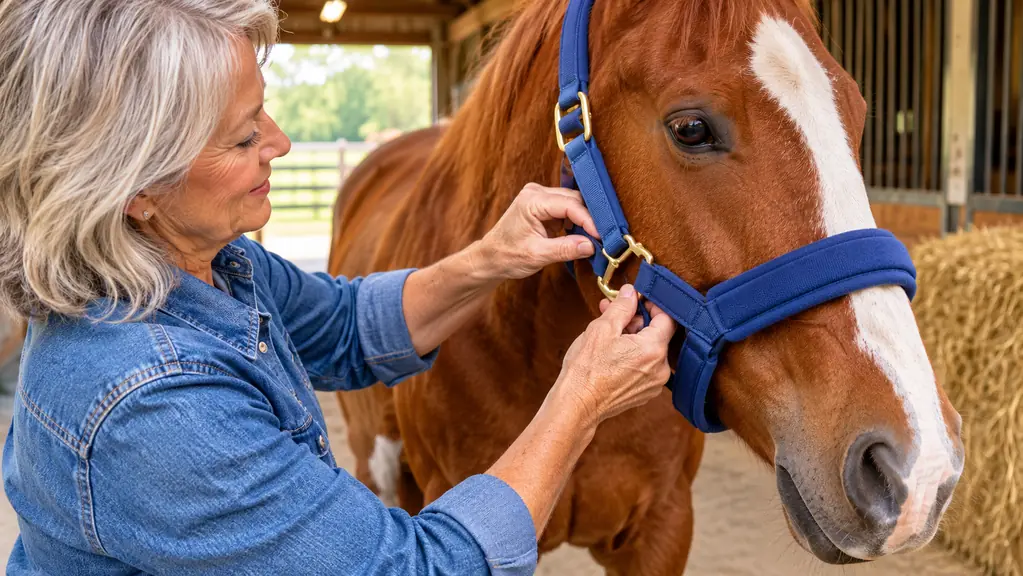
The padding is the first thing I would pay for again. Weaver Equine builds this halter with a soft PVC-coated foam rubber liner, and that liner is the reason Ranger does not come in from a haul with a bare patch across his nose. He is a quiet horse, but he sets back once when he is tied to the trailer and then settles, and a bare band of nylon on a horse that does that will take the hair off in a season. Two years in, the liner is flatter than it was new. It is still there, and it is still doing the job I bought it for.
The other half is the hardware and the way it goes on. Brass plated hardware and a snap closure mean I can put it on one-handed at the gate with a lead rope already in the other hand, and I can shorten the fit when Ranger comes out of winter heavier than he went in. The webbing is one inch, so it sits wide and flat instead of biting in, and the Average Horse size is a real fit rather than a rope pulled snug and knotted. For a horse that gets handled every single day, that adds up to less fuss and fewer small arguments at the gate.
Two years on one horse, and I still have not bought a replacement halter
The Weaver Equine padded nylon halter in Average Horse has been the everyday halter on my gelding since November 2024. One inch webbing, padded, adjustable, brass plated hardware.
Amazon Check today's price on Amazon →Where the Tough1 Rope Halter Wins
Rope halters are not a gimmick and I am not going to pretend they are. A rope halter like the Tough1 is a length of braided rope tied in a set pattern, with knots at the nose and under the jaw and no metal anywhere on it. That narrow rope puts a light pull right where the horse can feel it. On a horse that leans on you, or drags you toward the gate, that is exactly the feedback you want. My padded halter with its wide webbing softens that signal, and for groundwork that is a disadvantage, not a feature.
The other thing a rope halter does better is hold an adjustment. You tie the knots where you want them and they stay. Nylon webbing is quicker to change and easier to change back, but it is not as locked in place. If you have ever had a horse rub a buckle loose against a fence post, you know the appeal of a knot. Rope also has nothing that can rust, which is more than I can say for the halters I used to buy. Bonnie has never once had to throw one away because the hardware gave out, and I have thrown away a few.
What Two Years of Daily Use Has Looked Like
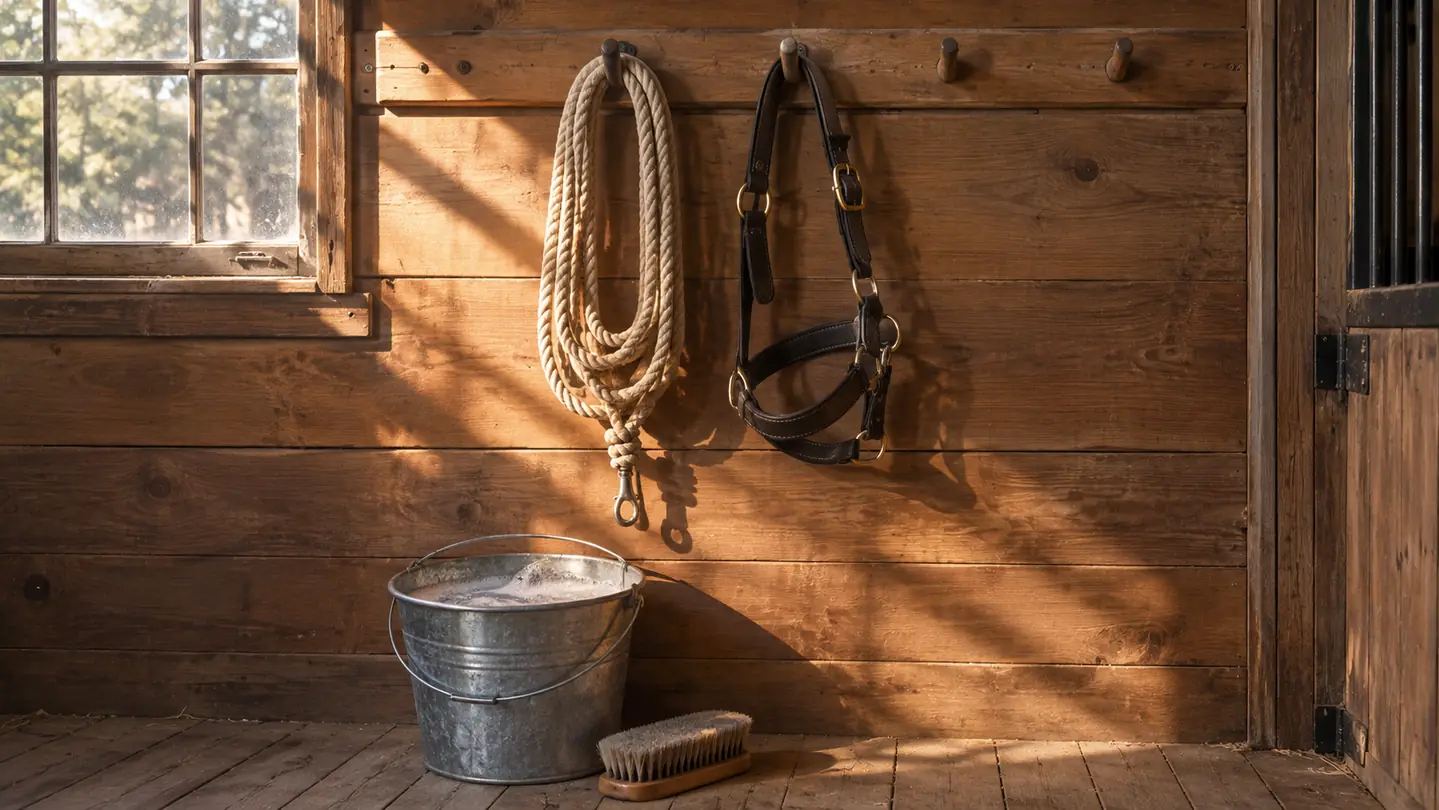
Ranger wears his halter for catching, grooming, tying, the farrier and loading, and for nothing else. He is never turned out in it and never left in a stall with it on, which is a rule I have kept since I was a girl and one I would keep with any halter on any horse. It hangs on a hook in the tack room when it is not on him. Twice a year, in spring and fall, I wash it in a bucket of warm water with a little soap, rinse it, and hang it in the sun to dry. That is the whole maintenance routine, and it takes about ten minutes.
Two years, one horse, one halter, and no stitching has failed. It has faded and the padding is flatter, and I still have not had to buy a replacement.
After two years, the webbing has faded some and the padding is flatter than it was new. No stitching has let go. The snap still snaps and the brass plating has not gone orange the way the old ones did. I am not going to tell you it looks new, because it does not. It looks like a halter that has been used every day for two years on a horse that sweats hard in an Arkansas summer, and it is still the one I reach for, which is the only test that matters to me.
The Fit Question on an Average Horse
Size is where a lot of people get into trouble with halters, so here is what I can tell you. The Weaver Equine comes in an Average Horse size with one inch webbing, and the listing gives the package as 20 by 12.5 by 2 inches and about 1.26 pounds. Ranger is 15.1 hands and runs around 1,050 pounds, which is dead average, and the Average Horse fits him with room to take it in or let it out. I can change the fit without retying anything, which is the difference between a ten second job and one that takes a pocket knife and cold fingers.
A rope halter does not have sizes in the same way. It has a length of rope, and the fit is whatever you tie. That is not a flaw, it is the design, and a person who knows how to tie one can fit it better than any buckle on any shelf. But it is a skill, and it is one you have to redo every time the horse changes weight. Ranger gains a little every winter and loses it by June. With this halter that is a small adjustment twice a year. With knots it would be a retie twice a year, which I can do, but I would rather not do it in the dark.
What My Riding Friends Say About Rope Halters
Bonnie has used hers for years, mostly on the ground, and she is quicker with those knots than I am with a snap. She says her mare respects it more, and I believe her, because I have watched that mare walk into the rope without a fuss where she will lean on a nylon halter. Another friend hauls with a rope halter and likes that there is no metal to bang against the divider. Neither of them uses one on a horse that sets back hard, and both said the same thing I would say, which is that a rope halter in rough hands can sore a horse, because all that pressure lands on a narrow band.
That is the part I would want a new rider to hear. Padding is not softness for its own sake. It is a way of spreading the load so a mistake costs the horse less. Rope gives you feel, and feel is worth having, but it is not forgiving if your timing is off. If you are learning, and I still count myself as learning at sixty-one, a padded halter is kinder to the horse while you figure it out. Our vet has said the same thing to me about leg wraps, and it holds for halters too.
Who Should Buy Which
Buy the Weaver Equine if your horse is handled every day and you want one halter that goes from the pasture gate to the wash rack to the trailer without a second thought. Buy it if your horse rubs behind the ears on a long haul, if your hands are cold in November, or if you are tired of replacing a faded halter every spring. Two years of daily use on a 1,050 pound gelding says it holds up, and that is the whole of my case. It is not the cheapest thing on the shelf and it is not meant to be.
Buy the Tough1, or another rope halter, if you are doing groundwork and want a light, clear signal, or if you have a horse that leans and you want him to feel a correction before it becomes a pull. Buy it if you like tying knots and you are good at it. Do not buy either one and leave it on a horse in a pasture or a stall, because that rule does not change with the material or the maker. And if you take a rope halter home, spend an afternoon learning to tie it properly before you put it on a horse.
The halter that has earned its hook in my tack room
Average Horse size, one inch nylon webbing, PVC-coated foam rubber liner, brass plated hardware with a snap closure. Two years on Ranger and still going.
Amazon See it on Amazon →