
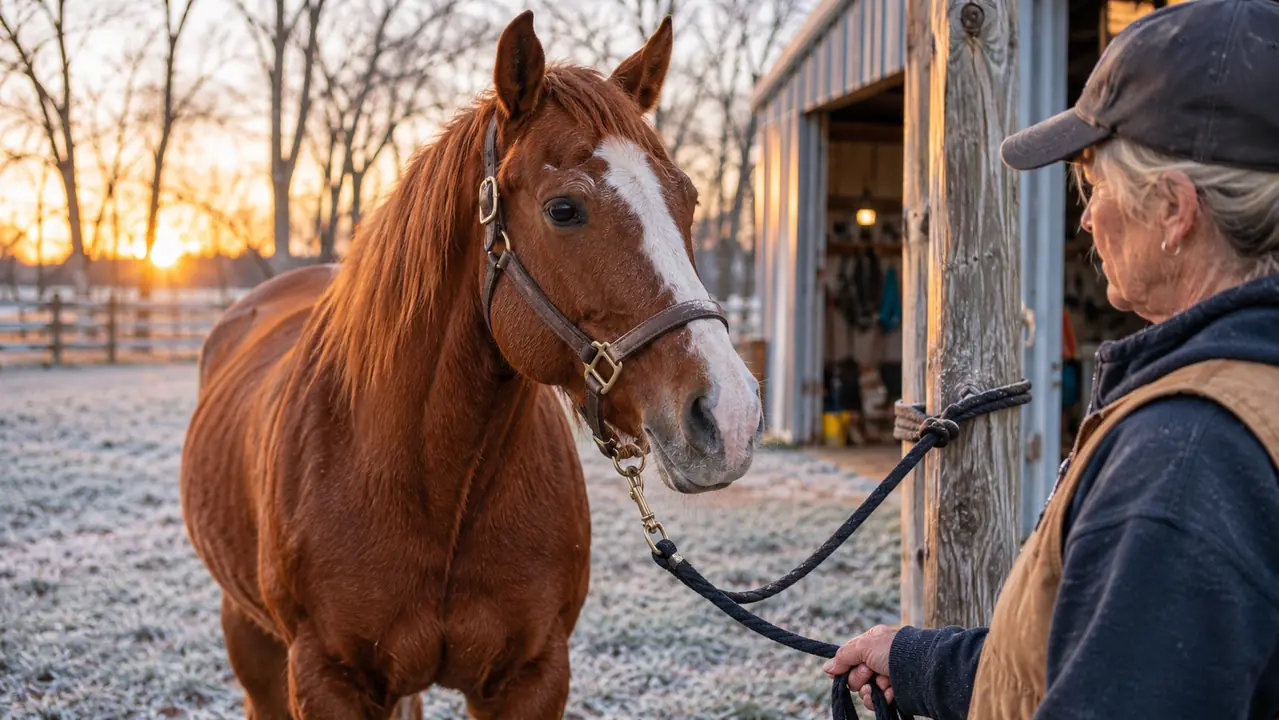
Two years ago I was buying a new nylon halter at the feed store every spring. Not because I wanted to. Because the old one had faded to the color of a paper sack, the buckles had gone orange with rust, and the webbing had frayed where it rubbed behind Ranger's ears. I would pay for another one, hang it on the same hook, and start the clock again. In November 2024 I stopped doing that and ordered the Weaver Equine padded nylon halter in the Average Horse size. It has been on my 14-year-old Quarter Horse gelding every single day of handling since. Here is what two years of actual use taught me.
I am not fussy about my tack. My saddle is older than some of the trucks in the barn lot and I fix what I can with a needle and a spool of waxed thread. But a halter is the piece of equipment I touch more than any other. Catching, grooming, tying, the farrier, loading in the trailer. It goes on Ranger first thing and comes off last. Something you handle that often is worth getting right.
The halter I stopped replacing every spring
Padded nylon, brass plated hardware, and a snap that closes one-handed in the cold. Two years on one gelding and it is still on the hook.
Amazon Check Today's Price on Amazon →Padding sits between the nylon and the horse
A cheap halter is a strip of webbing and nothing else. Under a horse that pulls back or leans, that webbing works like a dull knife across the bridge of the nose. The Weaver Equine halter has a soft PVC-coated foam rubber liner running under the nylon, so what touches Ranger is foam, not webbing. Two winters of mud and two summers of sweat later, the liner is flatter than it was new, but it is still there and still soft under my thumb.
One snap instead of cold fingers and buckles
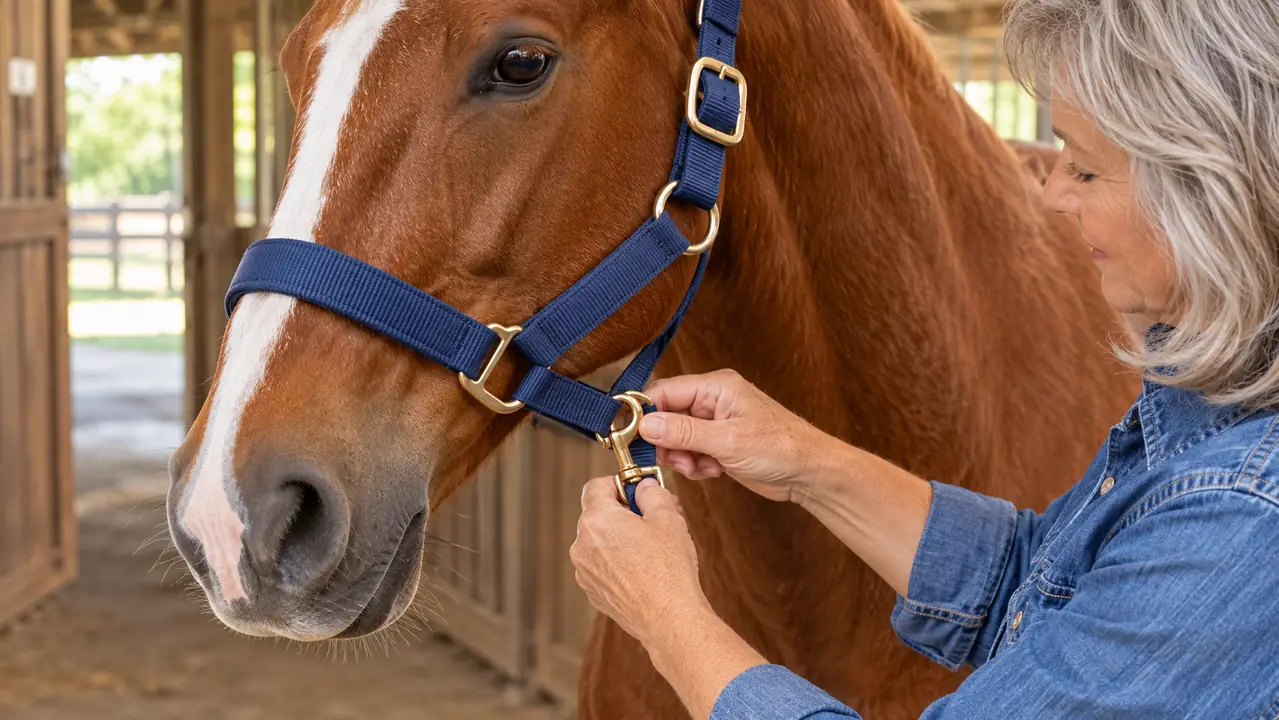
In February, when your fingers are stiff and the wind is coming across the pasture, you learn to dislike buckles. The Weaver Equine halter closes with a snap. I put it on Ranger one-handed while I hold his lead rope in the other hand, and I take it off the same way. The snap has not stretched loose in two years. That is most of the reason I do not miss the old halter. The hardware is the part your hands deal with forty times a week.
Brass plated hardware that has not rusted
The cheap halters I used to buy had steel that went orange by the second summer and left a rust stain on the webbing underneath. This one uses brass plated hardware. Ranger sweats hard in July and I catch him straight off the pasture, so the halter is damp most of the summer. I have not found a spot of rust on the snaps or the rings. A rusty snap is a snap that eventually stops snapping, and it usually picks the worst morning to do it.
One inch of webbing that does not saw at your hand
The webbing on this halter is one inch wide. When Ranger decides the grass on the other side of the gate is worth leaning toward, that extra width is the difference between a firm hold and a rope burn. I lead him by the halter itself for short distances around the barn and it does not bite into my palm. On the thinner halters I used to buy, a leaning horse felt like a wire pulling through your fingers.
It stays where you adjusted it
Adjustable is only worth something if it holds. I set this halter to fit Ranger in November 2024 and I have not moved it since, aside from checking it. The nylon has not slipped through the keepers or stretched out of shape. I check the fit the way I check everything, two fingers under the noseband and room behind the ears, and it has stayed put through two years of him rubbing his head on the gate. A halter that creeps loose comes off at the wrong moment.
It keeps plain webbing off a horse that sweats
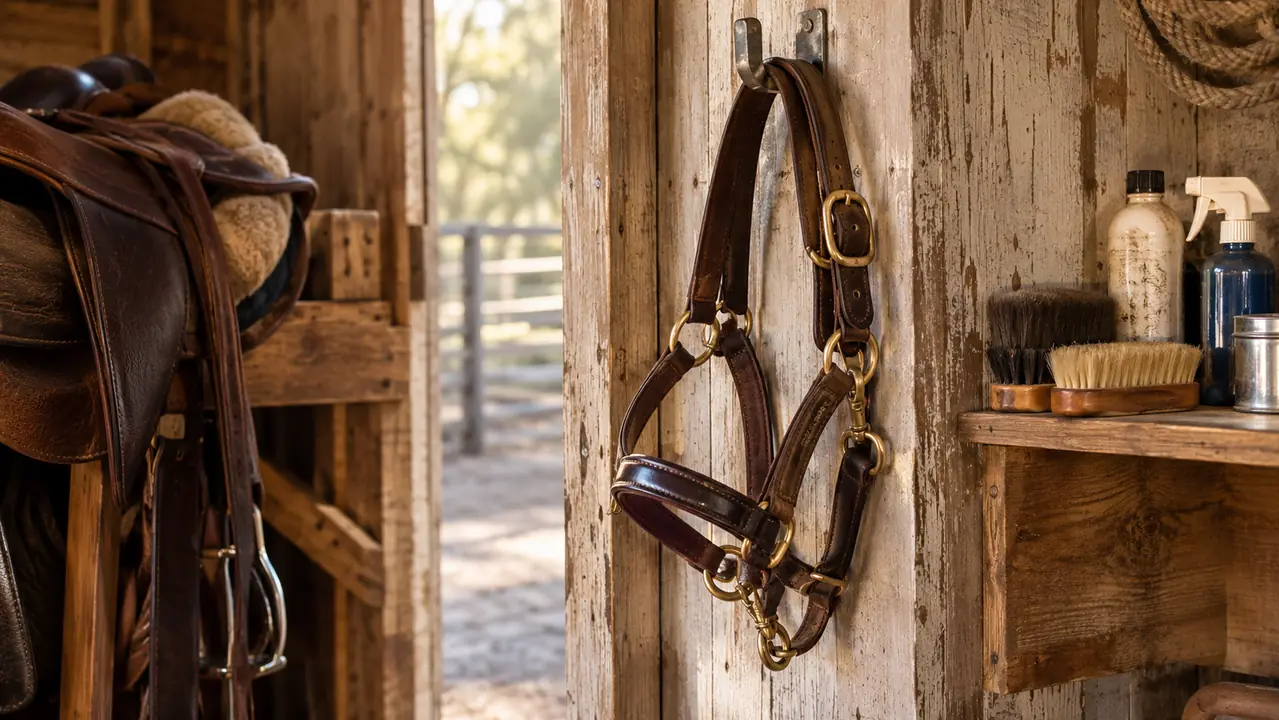
Ranger sweats heavily from May to September. A wet coat under bare webbing is where you get rubbed hair and, eventually, a raw spot. The liner keeps the nylon itself off his skin where the halter sits. I am not going to tell you it cured anything, because it did not. But the patch of rubbed-out hair I used to see every August stopped showing up that first summer, and it has not come back.
Two years in, the stitching is still holding
I will be honest with you, because you would find out anyway. The halter has faded. The padding is flatter than it was and the edges have a little fuzz on them. What has not happened is a single stitch letting go. I hand wash it in the spring and again in the fall in a bucket of warm soapy water, hang it over the fence to dry, and put it back on the hook in the tack room. Nothing has come apart at the seams.
The Average Horse size fits a Quarter Horse without a fight
Ranger is 15.1 hands and about 1,050 pounds, and Average Horse is the size he takes. Weaver lists that size for average builds, Quarter Horse included, and that matched what I found on him. It goes on over his ears without me having to wrestle it and it does not sit so loose that he can rub it off on a fence post. If you are guessing between sizes, measure your horse's head and follow the chart.
It holds up to a horse that leans on the lead
Ranger is herd-sour leaving the barn and he will lean on a lead rope to make his point. Every time I tie him it is with a quick-release knot to a post, never tied solid, and never left where he can fight a fixed anchor. The Weaver Equine halter has taken that leaning for two years of mornings. The rings have not pulled, the snap has not bent, and the webbing has not stretched out at the throat where the pressure lands.
You buy it once instead of every spring
I bought a cheap halter every year for most of a decade. One halter that lasts two years and is still going beats four short-lived ones, and it saves you the small irritation of noticing a frayed piece of equipment every time you walk into the tack room. This one is on my hook now and I have no plan to replace it. That is about the highest praise I can give a piece of tack.
Two years of mornings on that hook, and not one stitch has let go. I quit buying a halter every spring.
What I'd Skip
If you are shopping, skip anything with plain steel and no padding, and skip the temptation to size up because a roomier halter feels kinder. A loose halter on a tied horse is how horses get hurt. Skip the idea that a padded halter is a turnout halter, too. Ranger is never turned out or stalled wearing his, padded or not, because a halter left on a horse with nothing to break away is a hazard either way. And if your horse already has a head rubbed raw, that is a question for our vet, not for a review written by a retired mail carrier.
The piece of tack I touch more than any other
Hand washed twice a year, checked before every ride, still on the same hook two years later. Padded nylon in the Average Horse size.
Amazon Check Today's Price on Amazon →