
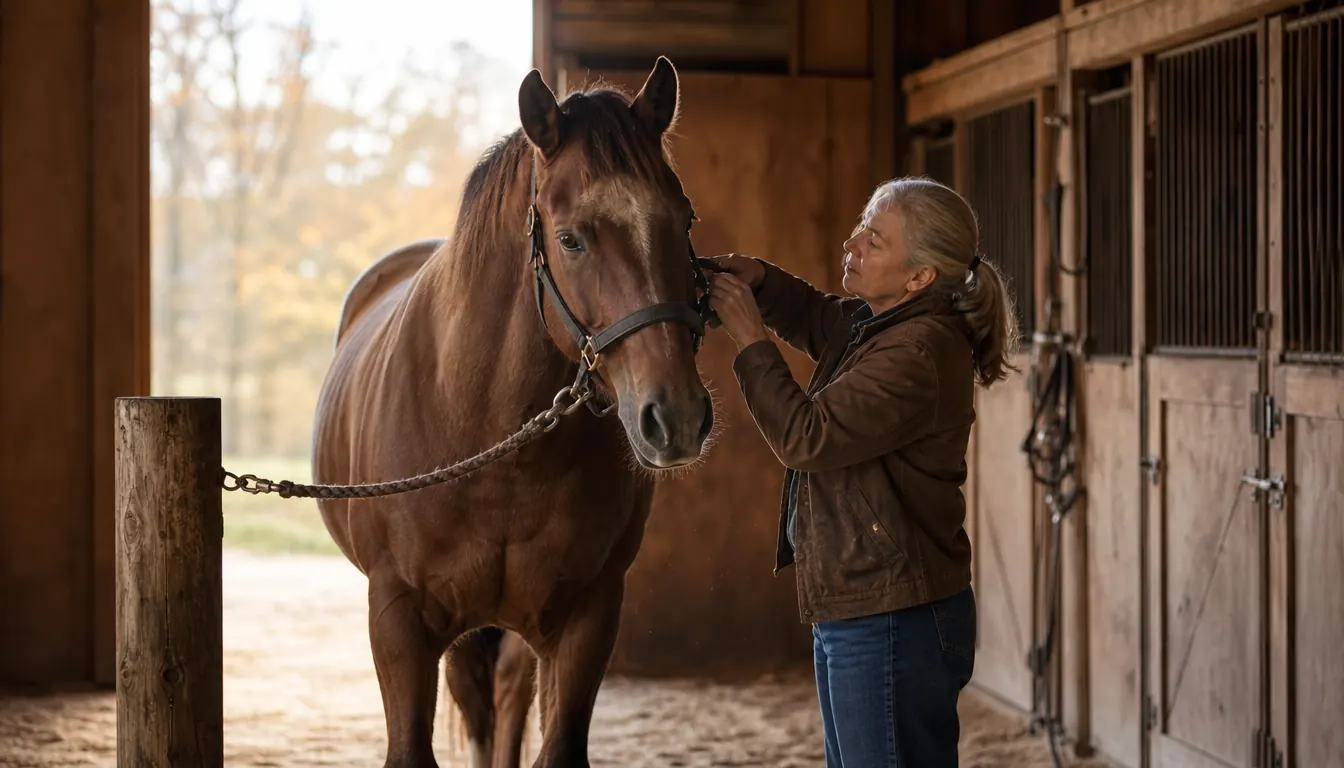
For about ten years, buying a halter was a November chore, same as putting up the storm windows. The old one would come off the hook looking gray and fuzzy, the buckles would carry rust, and one hole would be stretched wide enough that the tongue slid through it while Ranger stood tied at the trailer. So I would drive to the feed store, buy another cheap one, and start the clock over.
November 2024 is when I quit doing that. I bought the Weaver Equine padded nylon halter in the Average Horse size, one-inch webbing, and it has gone on Ranger's head every single time I have handled him since. Two years. Same halter, same hook by the tack room door.
Ranger is a 14-year-old sorrel Quarter Horse gelding, 15.1 hands, about 1,050 pounds, with a white blaze and one white sock on the left hind. He is not hard to halter. He is honest about his opinions, though. With the cheap halters he would toss his head once the noseband came over his ears and then rub the side of his face on his own shoulder, and I let that go for years because I figured that was just Ranger being Ranger.
The first thing I noticed with the Weaver Equine halter was the liner. There is soft PVC-coated foam rubber under the nylon, so what sits against his cheek and behind his ears is padding instead of a flat strap. Nothing rubbed. No hair came off the bridge of his nose that first week, which had never been true before. The hardware is brass plated, and around here that matters, because everything metal sweats in July and rusts by the next spring. The closure is a snap, which is a small mercy on a cold morning when your fingers don't work.
It has faded some and the padding has gone flatter than it was new. That is the whole list. No stitching has failed and nothing has rusted.
That is the honest report after two years. It has faded a little in the sun and the padding under the noseband is flatter than it was the week it came out of the package. That is the entire list of complaints. No stitching has let go. Nothing has rusted. The adjustment holes still hold the tongue where I set them in 2024.
The Halter I Have Not Had to Replace in Two Years
If your November routine still includes a trip to the feed store for a new halter, this is the one I would hand you. Padded liner, brass plated hardware, Average Horse size.
Amazon Check Today's Price on Amazon →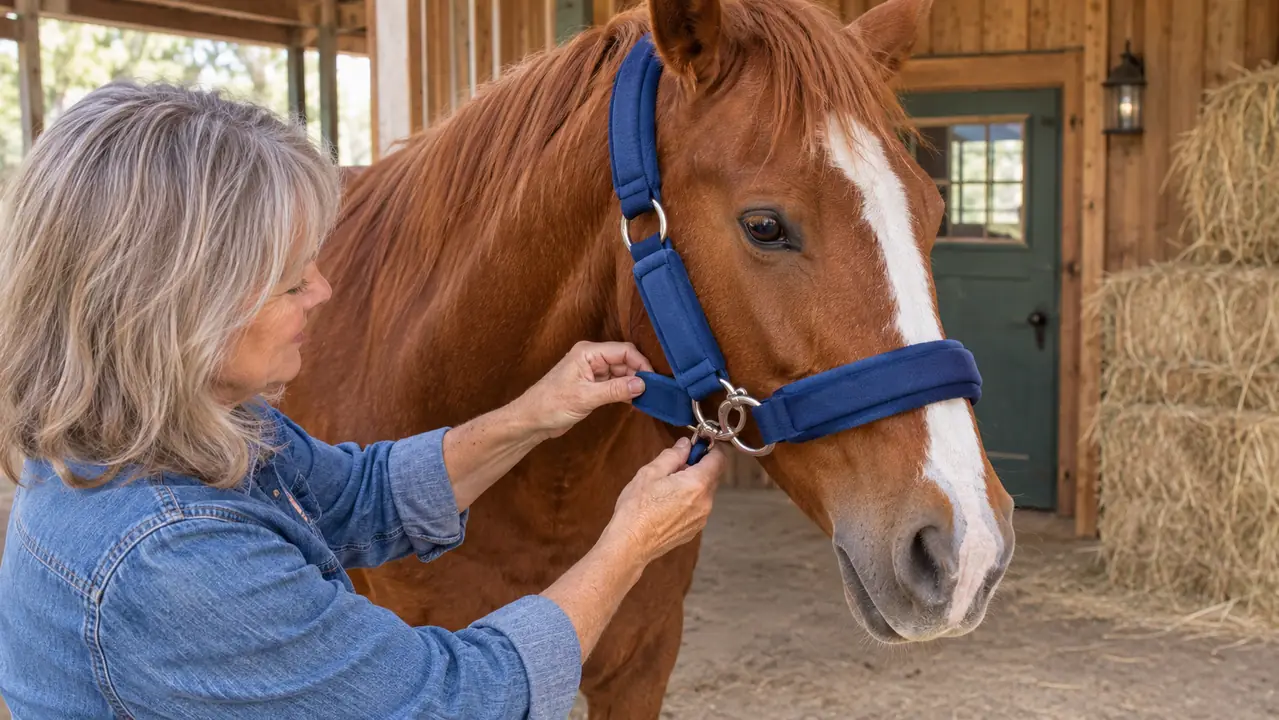
What Two Years of Real Use Did to It
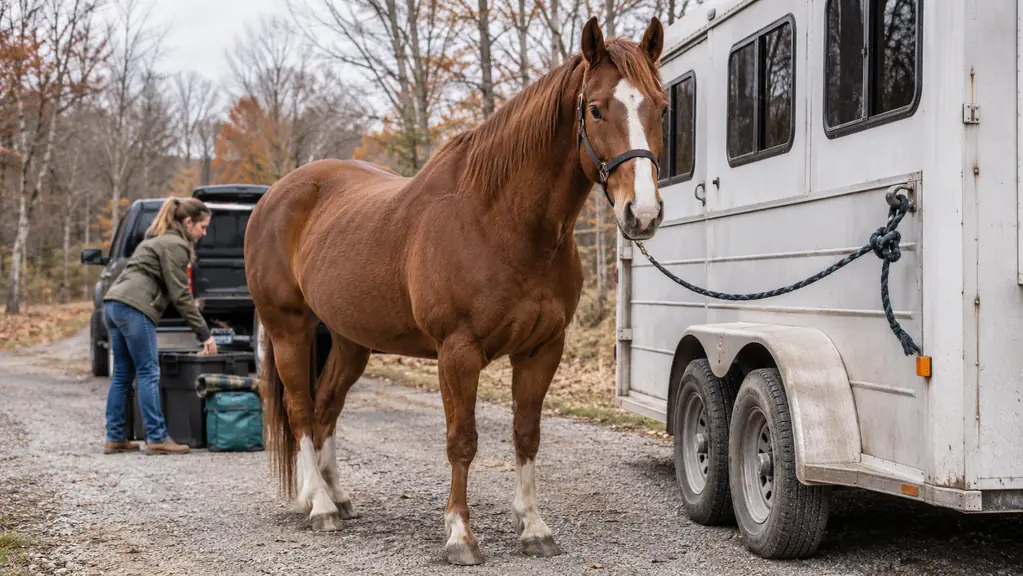
I don't show and I don't compete. I trail ride three or four times a week in good weather, about an hour and a half at a stretch on the Forest Service trails and the gravel roads near Harrison, and once a month I load Ranger in the trailer and meet friends for a longer ride. Every one of those trips starts and ends with this halter in my hand.
It goes on for catching, grooming, tying, the farrier every six or seven weeks, and loading. That is all. Ranger does not wear it turned out in the pasture and he does not wear it in a stall, because a halter left on a loose horse is how horses get hurt. When I tie, it is a quick-release knot around a post, never a hard knot, and never to anything that won't give. The halter isn't the danger. The way you leave a horse tied is.
What has surprised me is the hardware. Brass plated is not the same as brass, and I expected it to pit by the second summer. It hasn't. The snap still works the way it did the day I opened the package, the crown strap still adjusts, and the only wear I can point to is the faded nylon and that flattened padding. I wash it twice a year, spring and fall, in a bucket of mild soap and water, rinse it well, and hang it in the shade to dry. That is the whole maintenance routine.
Sizing is where I went wrong for years. I ordered the Average Horse size and set the crown so the noseband rides about two fingers below his cheekbone, and I have not moved it since, except to loosen it a hole in summer when he is slick with sweat. A woman at the barn asked me what I was using after she watched me lead him out one morning, and I told her the truth: it is a nylon halter with padding, it saves me a good deal of aggravation, and I stopped thinking about halters two years ago.
What I'd Tell You If We Were Sitting at My Kitchen Table
I would tell you the padding is the part that matters and the part the feed store halters skip. I would tell you to buy the size that fits the horse you have and then take ten minutes to set it properly, because a padded halter set too low on the nose is just a padded halter in the wrong place. I would tell you that nylon fades in the sun no matter what you pay for it, and that this one has, and that fading does not bother me a bit as long as the stitching holds. I would tell you it is not a training tool. If you have a horse that leans back against the tie, get help with that from someone qualified before you buy any halter at all, because no piece of nylon fixes it. And I would tell you the thing I wish somebody had said to me back in 2014: the halter is the piece of gear you touch more than any other, twice a day, every day, so it is worth picking one you don't have to think about. Ranger has opinions about a lot of things. He has never once had one about this halter.
Two Years, One Halter, No Rust
Weaver Equine padded nylon halter, Average Horse size, one-inch nylon with a PVC-coated foam rubber liner and brass plated hardware.
Amazon Check Today's Price on Amazon →