
A fly mask is the least glamorous thing hanging in a tack room, and the hardest piece of gear to judge honestly. You put it on in the morning. You take it off at night. For five months it is either doing its job or it is quietly failing, and you will not know which until the season closes and you are standing in the barn aisle turning it over in your hands, looking for the first place it gave out.
I bought the Harrison Howard CareMaster Pro fly mask with ears in late April 2026. Ranger wore it from the first week of May through the middle of October, every single day he went out to the pasture. It is washed now and folded into a feed sack in the tack room until spring. What follows is the honest version: the parts that earned their keep, the parts that wore, and the things I wish somebody had told me before I ordered it.
The Quick Verdict
A well-made daily fly mask that did one full season on a hard-sweating horse with no rub marks and no failed closure. The fleece flattens and the sizing will punish you if you guess, but the mask itself held.
Amazon Check Today's Price →The One Piece of Gear Ranger Wore Every Single Day This Summer
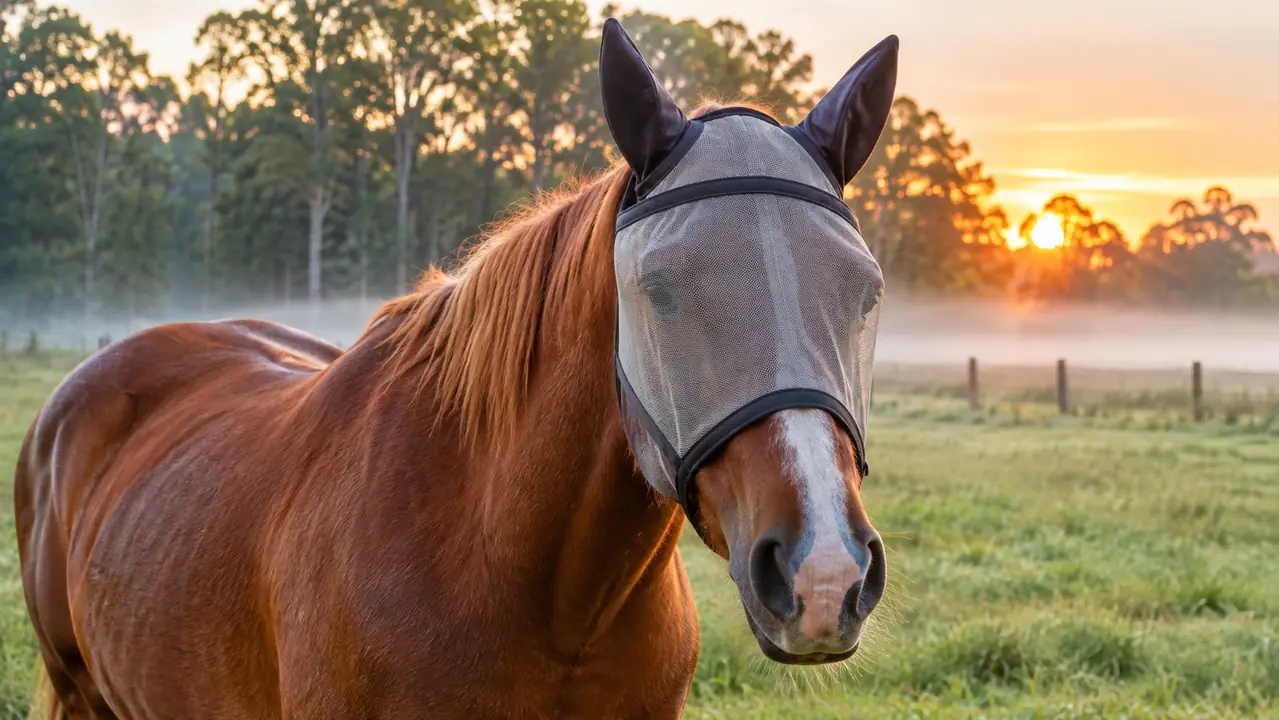
Translucent mesh, ears, fleece padding at the edges. Five and a half months of daily turnout in Arkansas heat and the touch closures are still gripping. Read the size chart before you order, because the fit is what makes it work.
Amazon Check Today's Price on Amazon →What Nobody Tells You Before You Buy a Fly Mask
A fly mask is not a cure for flies. It is a barrier. And a barrier is only ever as good as two things: how it sits on the horse's head, and how the edges behave against the skin. Everything else on the package is decoration.
The mask Ranger had before this one came from the feed store and had no ears at all. I bought it in 2025 because it was hanging on a hook and I needed one that day. By August the hook-and-loop closure had torn loose on one side and the mask hung crooked on his face, and the gnats were still getting into the folds of his ears. I would come down to the barn in the morning and find him shaking his head and rubbing it against a fence post until the hair came off.
That is the honest reason I went looking for something with ears. Ranger is a 14-year-old sorrel Quarter Horse gelding, 15.1 hands, about 1,050 pounds, with a white blaze and one white sock on his left hind. He sweats hard from June through September and he gets chewed up around the ears worse than anywhere else on him. I am not a vet and I do not play one, so when something on his face worries me, it goes to our vet. This was not that. This was flies.
How Ranger Actually Wore It
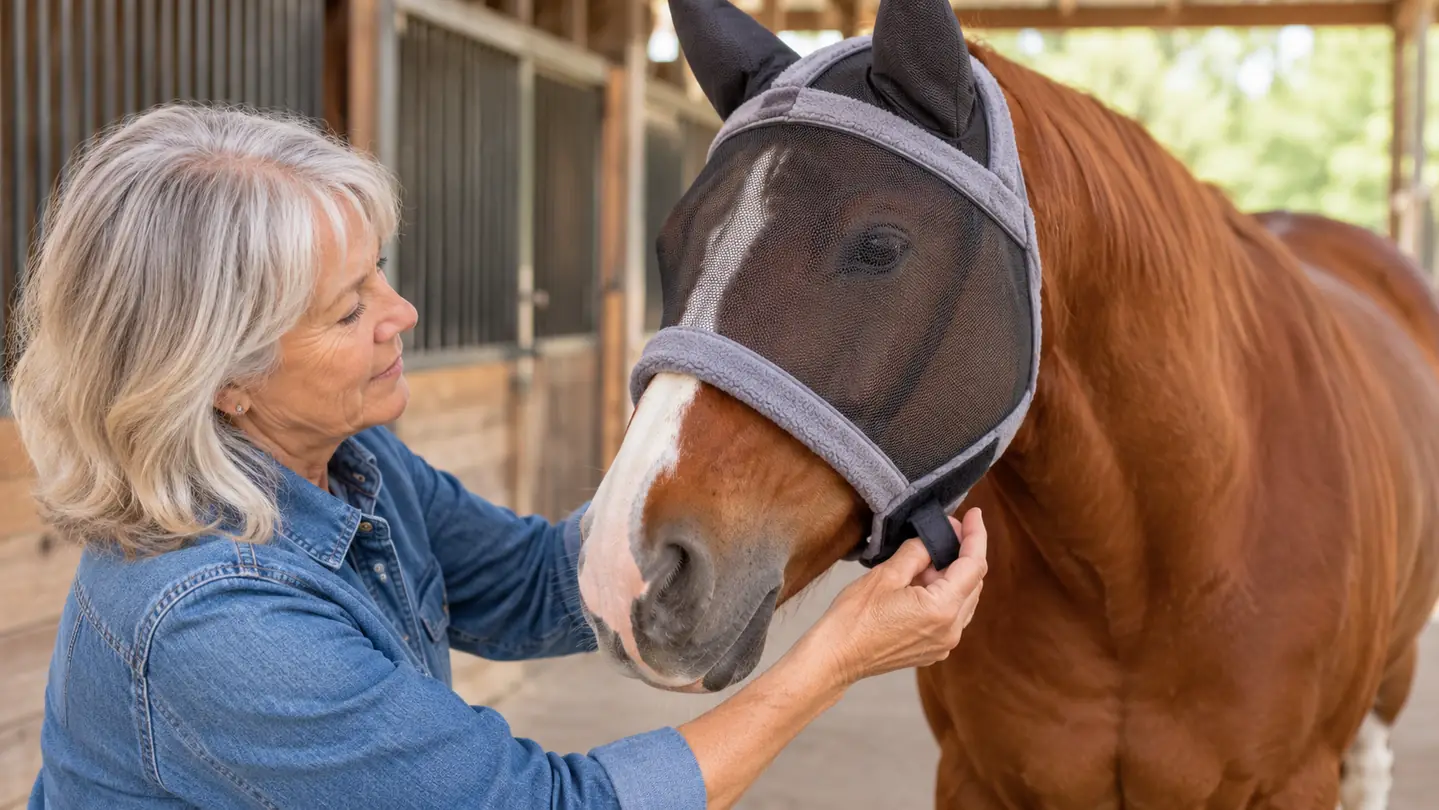
I put it on in the morning when he goes out to the four-acre pasture and I take it off at evening feeding. He does not wear it overnight and he does not wear it under saddle. That is my own rule, not something the manufacturer told me, and I keep to it because I want my hands on his face twice a day, once going out and once coming in. A mask that stays on for a week is a mask nobody is checking.
He does not love it. He stands for it, which is the best you can ask of a horse who is a little herd-sour about leaving the barn. The ears go on last, one at a time, and if I try to rush that part he lifts his head out of reach. When it is on properly he drops his head and goes back to grazing and forgets the whole thing.
The thing I watched hardest was his eyes. Before this mask, his eyes watered almost every day in fly season, and there had been a summer sore in the corner of one eye two years back that the vet looked at. With the mask on, the watering stopped inside of two weeks. Whether that was the mesh or the ears or the simple fact that nothing could land on him, I cannot tell you. I can tell you his face was dry by the middle of May and stayed that way through October.
He also quit rubbing his head on the fence post, and that stopped in June. For me that was worth more than any claim printed on a label.
The Parts That Held Up
The mesh is the first thing to talk about, because it is most of the mask. It is a translucent fine mesh, and I can see his coat through it from ten feet away. That matters more than it sounds like it should, because a mask you cannot see through is a mask you stop checking. The Harrison Howard listing calls it high visibility with lab tested UV protection, and I take that at face value. What I know for certain is that the thin skin around his eyes never looked scorched the way it did in the summer of 2025.
The closures are touch closures, one on each side below the jaw. As of the middle of October they are still gripping. That sounds like a low bar until you remember the feed store mask from 2025, which tore out at exactly that spot in its first summer and left me lashing it on with twine like a fool.
The padding is thick fleece and it sits along the edges, which is where a fly mask either rubs a horse raw or does not. Ranger had no rub marks this season. None at the cheekbones, none under the throat, none behind the ears. In 2025 he had a bare patch the size of a half dollar under his jaw by August, and I blamed the flies for it. Some of that was the mask.
The ears have stayed whole. No holes, no fraying at the tips, no separating where they meet the body of the mask. That is where I expected it to fail first, given how hard he rubs, and it did not.
The watering in his eyes stopped inside of two weeks, and by June he had quit rubbing his head on the fence post. That is the whole review, really.
The Parts That Did Not Hold Up
The fleece is flatter now than it was in May. It still does its job, but it has compressed against the edges and it holds dirt deep in the nap. I washed the mask twice during the season and once at the end, and the fleece came back softer both times but never quite back to the loft it had when it came out of the bag.
The mesh looks worn. Not torn, and I want to be plain about that, because I know how this reads. It has not ripped. But there is fuzz along the bound edges, and the whole thing has a tired look to it now, the way a good work shirt looks after a summer of hard use. Nothing has failed. It just looks like gear that has been somewhere.
The ears get grubby fast, inside and out. There is no way around it, because ears are where a horse sweats and where he rubs. I found myself wiping them down with a damp rag every few days rather than washing the whole mask, mostly so I was not putting a dirty ear back over a clean one.
It does not cover the muzzle. That is not a complaint about this mask, it is just what a mask with ears is. Ranger still needed fly spray on his nose, his chin, his chest and his legs every morning. Anyone who tells you a fly mask replaces fly spray has not stood in an Arkansas pasture in July.
And the honest one. I do not know whether it has a second season in it. It came through this one whole, but it looks like a piece of gear that has done its work. I would not be surprised to be ordering another in April. I would not be surprised if this one made it either. I will find out in the spring, and I am not going to pretend otherwise to make a tidier story.
The Difference Between This and the Feed Store Mask
The feed store mask I had in 2025 was a single layer of mesh with a binding around the edge and a hook-and-loop strap. It had no ears. It lasted from May until the first week of August. The closure pulled loose, the binding frayed, and it spent the rest of the season hanging on a nail because I could not keep it on him.
There are three real differences and they are all in the details. The ears, first. Ranger's ears are where the gnats work him, and covering them changed his whole disposition in the pasture. Second, the fleece padding at the edges. That is what kept the mask from sawing at his cheekbones, and the feed store mask had none of it. Third, the touch closures actually hold. I have not had to re-fasten this mask once because it came loose on its own.
What I will not tell you is that the expensive one is always the right one. I have a friend who has good luck with a plain mask and a fly sheet combination on a horse with a narrower head. Fit beats everything. If the cheap mask had fit Ranger properly and stayed closed, I would still be using it, and I would not have much to write about.
Sizing and Fit, and Where People Get It Wrong
We followed the Harrison Howard size chart. That is the whole of my advice on sizing, and I mean it plainly. I measured Ranger's head with a cloth tape the way the chart said to and ordered the size that matched. It fit from the first day and it fit in October.
The mask I have is the large horse size. It sits well back on the jaw and clears his eyes with room to spare, which is what the listing means when it talks about large eye space. That clearance matters more than most people think. A mask that sits close to the eye is worse than no mask at all, because every blink drags against it and the eye gets irritated by the very thing you bought to protect it.
There are two touch closures and they are what you adjust. I set them so the fleece lies flat against his jaw. Pull them too tight and the fleece rolls under and leaves a pressure mark. Leave them too loose and the mask shifts and the ears wander off his ears, which defeats the entire reason for buying one with ears in the first place.
The common mistake, and I have watched friends make it, is ordering by guess because the horse is standing right there and it seems obvious. Ranger is a big-framed horse. His head is not especially wide. If I had ordered on the assumption that a 1,050 pound horse takes the biggest thing available, I would have been wrong and I would have been out the money and the season. Follow the chart.
What It Did Not Fix
Flies still landed on him. All over his body, all summer long. A fly mask covers a face, not a horse. I still sprayed him every morning, I still brought him in during the worst of the afternoon heat in July and August, and I still dragged the pasture twice a week.
It did not stop the herd-sour behavior at the gate and it did not make him any easier to catch on a windy morning. Those are separate problems, and a piece of mesh is not going to solve them.
What it did was take his face out of the equation. Eyes, ears, the soft skin around them. Once that was handled, the rest of fly season was ordinary management, and ordinary management I can do without thinking about it.
What I Liked
- Ears stayed whole through a full season of daily turnout
- Translucent mesh you can see the horse through, so you actually check him
- Touch closures still gripping in mid October
- Fleece padding at the edges, and no rub marks on a horse that rubs
- Eyes stopped watering within two weeks
Where It Falls Short
- Fleece compresses over a season and holds dirt deep in the nap
- Bound edges fuzz up and the mask looks tired by fall
- Ears need wiping down more often than the mask needs washing
- Sizing punishes you if you guess instead of measuring
- Covers the face only, so fly spray stays on the morning list
Who This Is For
This is for the rider who turns a horse out every day through fly season and wants the face handled without a daily argument. Especially if your horse takes the worst of it around the ears, or if you have had a summer sore before and you do not want another one. It is also for the person who has been buying the feed store mask every year and replacing it in August. That was me in 2025, and I got a full season out of this one without a single failure at the closure.
It suits a horse that stands reasonably well for handling and a person who is at the barn morning and evening anyway. If that is your life, this mask will do exactly what you want it to do, quietly, for months.
Who Should Skip It
If your horse lives out twenty-four hours and you are not there twice a day to put a mask on and take it off, think hard before you buy. A mask that stays on for weeks is a mask nobody is inspecting, and I have seen horses come in with one rubbed into the top of the head. That is not this mask's fault, it is the management, but it is worth saying out loud.
If your horse is a determined head rubber who can get a mask off in an afternoon, no fly mask is going to hold, this one included, and I would not spend the money hoping. And if you are looking for something that replaces fly spray, shade and clean pasture, skip it. It does not, and nothing does.
Washing It and Putting It Away
I washed it in a bucket of warm water with a little mild soap, worked the fleece with my fingers instead of scrubbing at it, rinsed it twice and hung it in the shade to dry. Not in the sun, because the mesh has already had a summer of sun and does not need another one in the name of cleaning.
There is not much to it. Wash, rinse, dry in the shade, back on the next morning. The fleece comes back softer every time. It does not come back thicker.
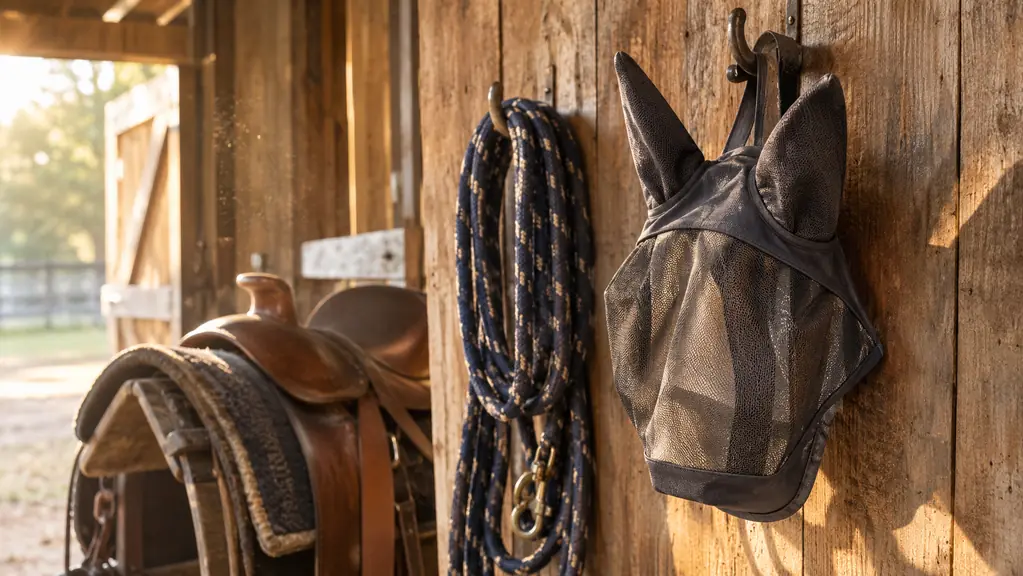
At the end of the season I gave it one more wash, let it dry all the way through, and folded it into a feed sack in the tack room with the rest of the summer gear. It will come out in April and I will look at the edges again and decide. Some gear you know about on the day you take it off. This one I will know in the spring.
One last thing, the sort of thing I would tell a friend leaning on the fence. The mask is the easy part. Measuring the head, checking the fleece is flat, wiping the ears out every few days, taking it off at night. That is the part that decides whether any fly mask works, and it is the part nobody puts on a label.
Five and a Half Months of Daily Turnout, and the Closures Still Grip
The mesh has fuzzed at the edges and the fleece has flattened, and I would still order the Harrison Howard again in April. Measure the head, follow the chart, wipe the ears out, take it off at night. That is the whole of it.
Amazon Check Today's Price on Amazon →