
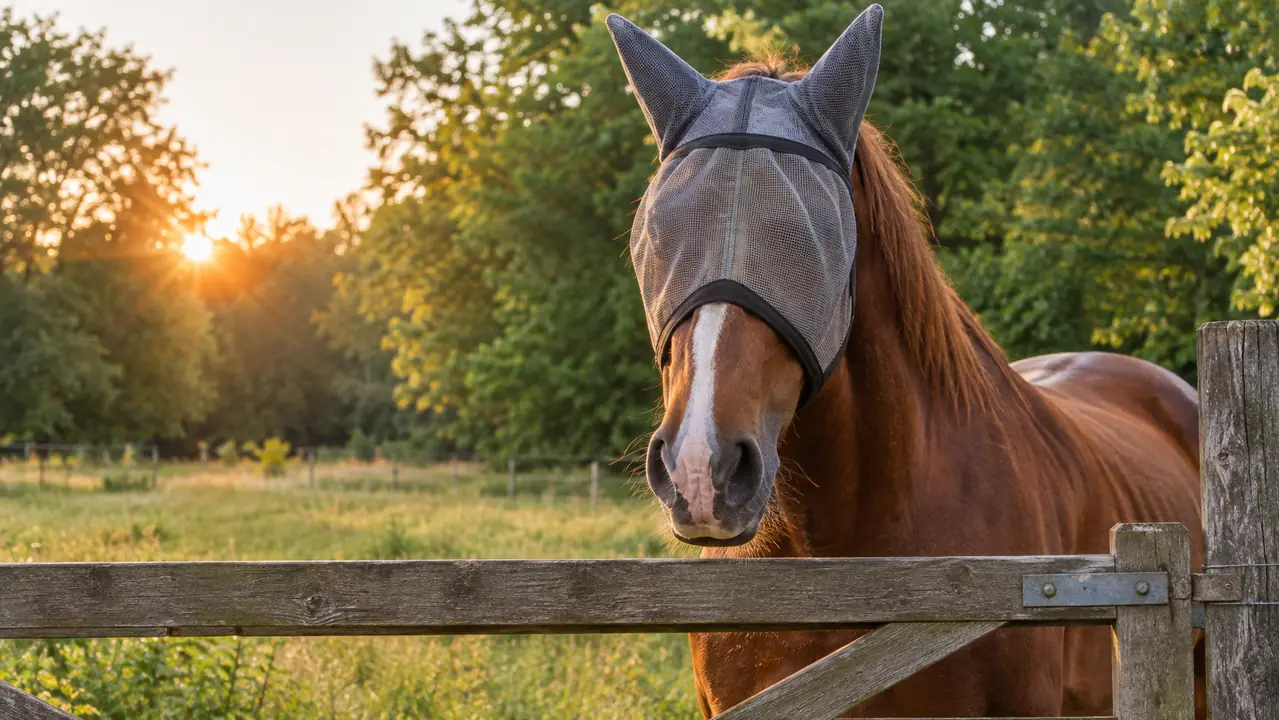
Last July I stood at the gate watching Ranger stand in the shade of the run-in shed with his head down and his eyes shut tight, and I finally admitted the feed store fly mask was a waste of money. He is a 14-year-old sorrel Quarter Horse gelding, about 1,050 pounds, and he sweats hard in an Arkansas summer. Flies find him. Gnats find his ears. Every year I bought whatever mask was cheapest and every year I was patching it with twine by August.
In late April I bought the Harrison Howard CareMaster Pro with ears, and Ranger wore it every day from May through mid October. On at morning turnout, off at evening feeding. That is five and a half months on one horse in one fly season with no patches and no replacements. If you are standing where I was last summer, here are the ten reasons I would buy the same one again next spring.
The mask that came out of a full Arkansas fly season in one piece
Ranger wore the Harrison Howard CareMaster Pro with ears from May to mid October, then it was washed and put away. Ears covered, large eye space, thick fleece padding at the edges, translucent mesh. If the flies are winning at your place, start here.
Amazon Check Today's Price on Amazon →It covers the ears, which is where the fight was actually happening
Before this I used a feed store mask with no ears. It tore at the hook-and-loop closure in its first summer, and the whole time it stayed on, gnats worked the inside of Ranger's ears. He shook his head and pinned his ears at nothing, all day long. The Harrison Howard mask has ears built into it. Within about a week the head shaking out in the pasture settled down. If your horse's ears are the sore spot, a mask without ear covers is not solving the problem you have.
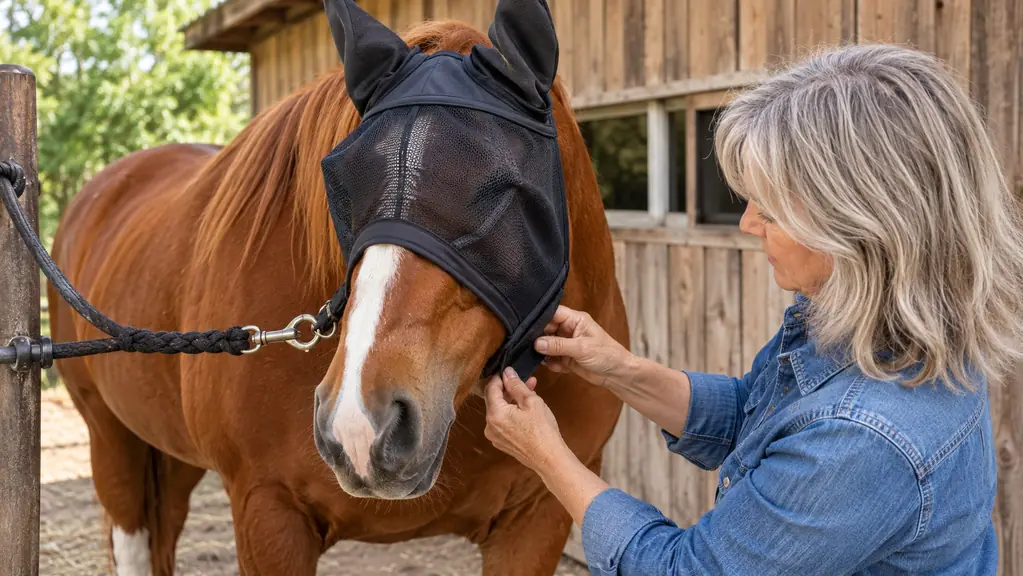
Large eye space keeps the mesh off the eyeball
There is enough eye space built into this mask that the mesh stands away from the eye instead of resting on it. Sounds like a small detail until you watch a horse try to rub a mask off on a fence post for twenty minutes. Ranger's eyes watered all through the summer of 2025. Within about two weeks of wearing this one the watering stopped. Same pasture, same fly pressure, same horse, nothing else changed in his routine.
Thick fleece padding is what stops the rub marks
I have watched a cheap mask leave a bald stripe across a horse's cheekbone by August. Padding is the difference. This one has thick fleece padding along the edges and it does two jobs at once. It keeps the edges from rubbing a line into his face, and it closes the gaps so there is no slot for a fly to walk in through. Ranger came out of the season with the hair on his face intact, which is more than I can say for the summer before.
The mesh is translucent, so he still sees the gate
A horse that cannot see well through a mask will rub it off on the first fence post he finds, or he will stand in the corner and refuse to graze. This mesh is a fine translucent weave. Ranger still spots the geldings across the road, still finds the gate, still walks the fence line at dusk. He grazes in it and he drinks in it without me adjusting a thing. That is the whole test as far as I am concerned.
UV protection for the thin skin under a white blaze
Ranger has a wide blaze and the skin under it is thin. Our vet told me years ago to give that face shade in high summer, and I have not forgotten it. The Harrison Howard mask carries lab-tested UV protection and I will take every bit of it I can get in July. I am not going to tell you a mask replaces shade and water, because it does not. It is one less thing to worry about at two in the afternoon.
Within about two weeks of the first morning I put it on, the watering in his eyes stopped. Same pasture, same fly season, same horse.
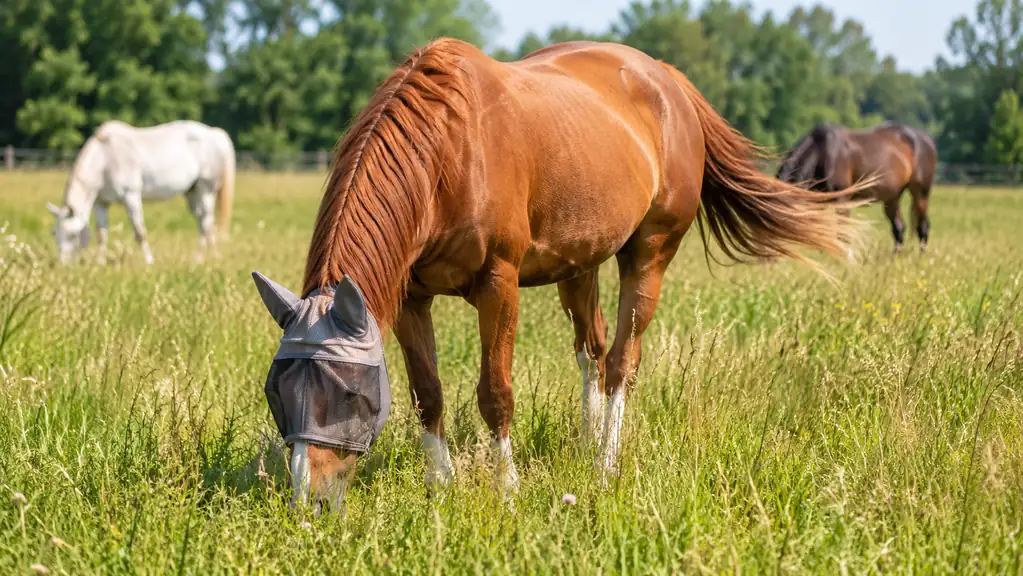
Midge-proof fabric, not just a screen for the big flies
The little ones are what drove him crazy. Gnats come up out of the grass in a cloud at dusk and go straight for the ears and the corners of the eyes, and you can swat all day and never get ahead of them. The material on this mask is midge-proof and breathable, so it keeps the small stuff out without turning his head into an oven on a 95 degree afternoon. Breathable matters more than people give it credit for down here.
I can put it on one-handed with a lead rope in the other
Secure touch closures. That sounds like nothing until you are holding a lead rope in one hand, a feed bucket in the other, and a horse who wants his breakfast now. Most mornings I fasten it one handed at the gate without setting anything down. The closures on this one held through a whole season of on and off every single day, which is more than the last mask managed before it gave out.
The shape follows the horse's head instead of fighting it
The listing calls it anatomically shaped, and I believe it, because it sits down over the poll and along the cheeks the way his head actually goes instead of like a sack tied on with string. The first week I kept waiting for it to shift or gap at the jaw. It did not. Harrison Howard built this one so it does not rub, and Ranger's forehead, which is the part that would know, agrees with them.
It stays put when he rolls, grazes and walks the fence
Ranger rolls every morning after turnout. Every single morning, usually twice. The mask stays where I put it. The old one slid down over his eyes by noon and I would walk out and fix it, sometimes two or three times a day. This one has not done that once. One rule I keep and I will keep saying it: he never wears it overnight and never wears it under saddle. On at turnout, off at evening feeding.
It washed up and went into a feed sack for the winter
Five and a half months of daily wear, then I washed it, let it dry in the shade, and put it in a feed sack on the shelf in the tack room. It came out the other side with a little fuzz along the edges and nothing else wrong with it. No failed closures, no torn seams, no twine. Considering what I have thrown away on masks that lasted one summer, that is the reason it goes back on him next spring.
What I'd Skip
If your horse has a plain face, no ear trouble and no history of watery eyes, a cheaper mask will likely do the job and I would not argue with you about it. What I would skip is a mask without ear covers on a horse the gnats bother, because that was my mistake for two summers running. I would also skip buying before you measure. Harrison Howard publishes a size chart and we followed it. A mask that is too big slides down, a mask that is too small rubs, and neither one is the mask's fault.
Two more I would skip, and these are safety rather than shopping. Do not leave a fly mask on overnight, and do not ride in one. Ranger wears his for turnout only, on in the morning, off at evening feeding, and it has never been on his head under saddle. The rest is simple housekeeping. Wash it when it gets crusty, dry it out of direct sun, and keep it in the tack room where you can find it in the dark at six in the morning.
One mask, one full season, no patching with twine
Ranger wore the Harrison Howard CareMaster Pro with ears from May through mid October and it is going back on him next spring. Ears covered, large eye space, thick fleece padding, translucent mesh. Measure his head against the size chart and get it ordered before the gnats show up.
Amazon Check Today's Price on Amazon →