
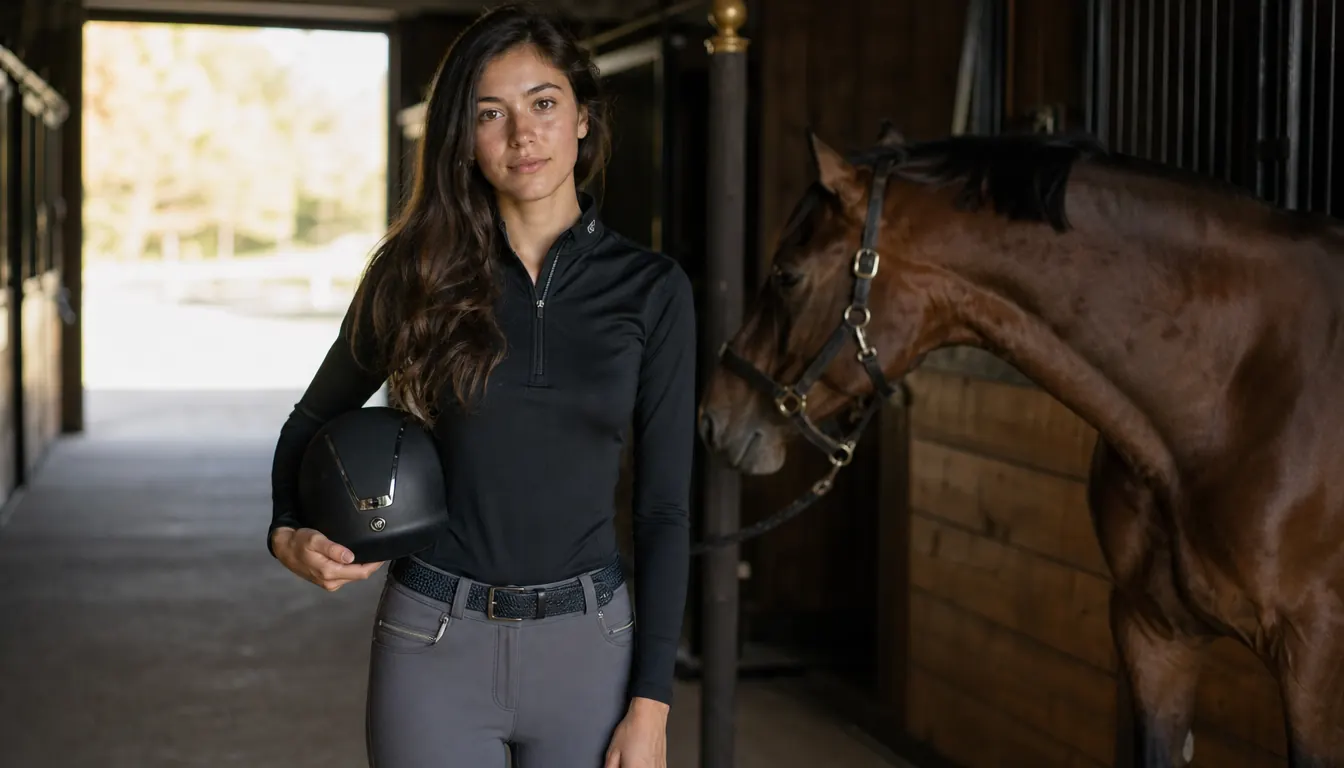
Most people who ride in a helmet that fits wrong have no idea it fits wrong. I was one of them for about forty years, except I was not even wearing a helmet. I rode in a felt cowboy hat, and a cowboy hat, whatever else it does for your shade and your looks, does not do the one job a helmet has. It does not stay on your head when your head is the thing that hits something.
What got me out of the cowboy hat was luck, not wisdom. On a Saturday in mid-March of 2026 my gelding Ranger jumped sideways at a deer coming out of the ditch on a gravel road, and I came off sideways into soft grass. I bruised my left shoulder and my left hip. I did not hit my head, and that was luck and nothing else. My friend Bonnie, who has ridden a good deal longer than I have, watched me dust myself off and said the plain thing that needed saying: that could have been your head. So in early April I ordered a Troxel Spirit Duratec, dug the cloth tape measure out of my sewing box, and did what the Troxel size chart told me to do instead of what I thought I knew. Seven months and about eighty rides later, this is how I fit it, step by step, the way I would tell it to you leaning on the fence.
Fit starts with a tape measure, not the hat size you have been buying since 1985
I measured my head the way the Troxel chart says to, landed in a Large, and adjusted from there. Everything below is what I learned after that first morning in the tack room.
Amazon Check Today's Price on Amazon →Step 1: Measure your head with a soft tape, not a hat size
The first thing to get out of your head is the size of your hat. My felt hat was a 7 1/8, and that number is worth nothing when you are buying a helmet, because a hat is built to sit on top of your skull and a helmet is built to come down around it. Get a soft sewing tape, the cloth kind, not the metal one from the shop drawer that wants to kink and fight you.
Run the tape around your head about a thumb's width above your eyebrows and keep it level the whole way around. It should pass over the widest part at the back of your head. Snug, not tight enough to leave a mark, and not so loose that it slides down. Write the number down, then do it a second time, because the first pass is usually a little off. If you have a lot of hair, measure it the way you will actually wear it on a ride. I measured mine on two different days and got the same number both times, which is how I knew I had it right before I spent anything.
That number goes against the Troxel size chart, and the chart put me in a Large. Notice the word chart. A helmet is not one universal size that stretches to fit every head. The shell comes in sizes, and the adjustable strap is there to snug the chin, not to make a small shell fit a big head. The Spirit is built to adapt to a range of head shapes and it has a low-profile design, but it is not going to grow for you, and no amount of strap fiddling will fix a shell that is the wrong size.
Step 2: Set it level, not tipped back like a feed bucket
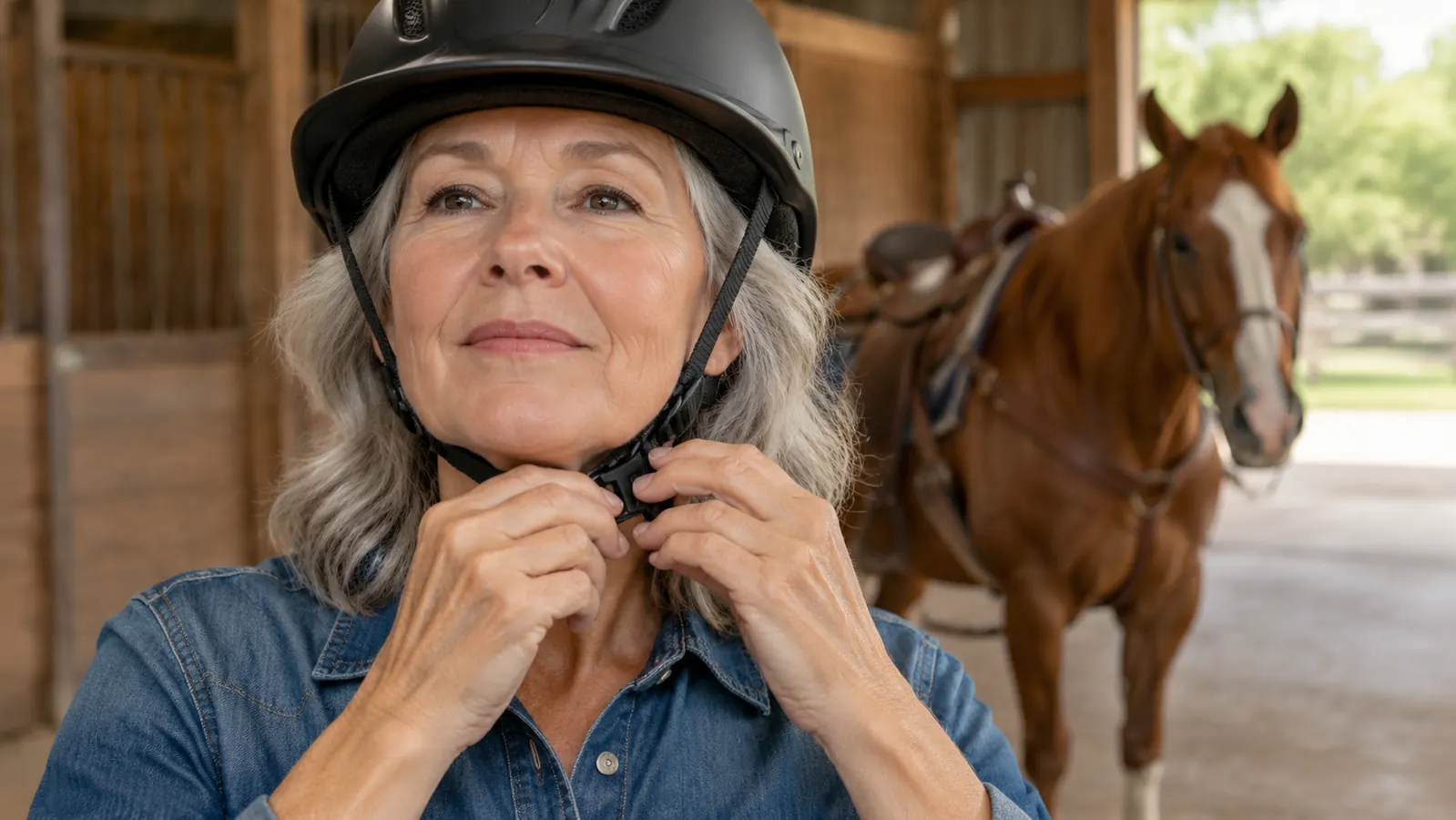
Put the helmet on with the front edge low, about an inch above your eyebrows, and level from front to back. The most common mistake I see at a trailhead is a helmet tipped back so the front edge sits halfway up the forehead. People do it because the helmet feels tight across the brow when it is sitting level. That tightness is information, not a defect. Either the shell is a size too small for you, or you are wrestling it on instead of rolling it on.
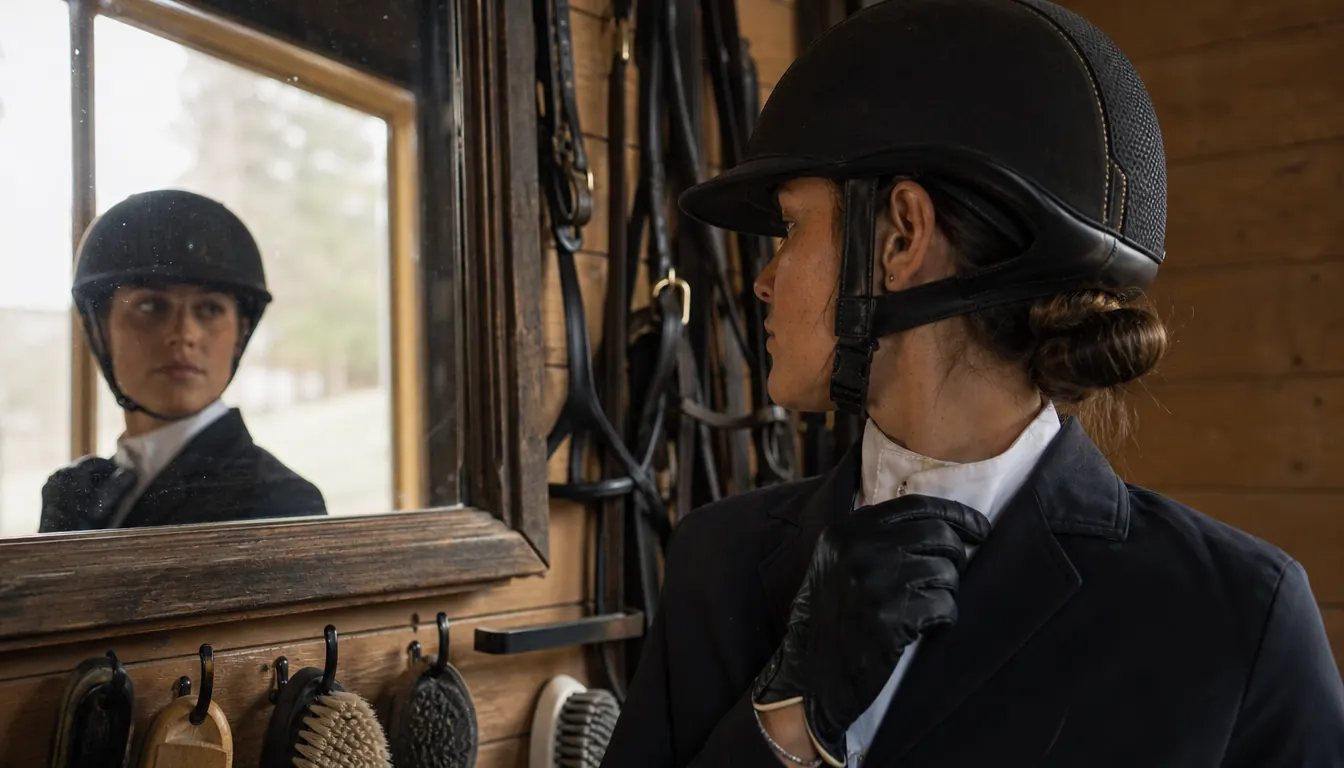
The Spirit is a full coverage helmet, so it comes down further over the back of your head than the small schooling helmets some folks wear. That coverage is part of why I picked it. Tipped back, you give up some of that at the back and the front edge is no longer where it was designed to sit, which means you are carrying a helmet around rather than wearing one. Look in a mirror, or better, have somebody look at you from the side. The line across your forehead should be even. If it climbs toward your hairline on one side, it is crooked.
If the helmet presses hard in one spot, at a temple or the center of your forehead, take it off and start again. Pressure all the way around and pressure in one place are two different things. All the way around is fit. One hot spot is the wrong shape or the wrong size, and wearing it anyway for an hour and a half will not train it into shape. It will just give you a headache.
Step 3: Set the chin strap once, in the tack room, and leave it alone
Fasten the strap under your chin and snug it up. You want it firm against the jaw with room for about one finger underneath, and you want to be able to open your mouth wide without it choking you. If you can pull the strap down off your chin without unfastening it, it is too loose to do anything for you.
The strap is adjustable, so adjust it once, at home, with nobody waiting on you and no horse tied to the trailer. Then leave it. I have watched people fuss with a strap at the mounting block and come out tighter on one side than the other, and a strap that is tight on one side pulls the whole helmet crooked on your head. Set it and forget it, and check it now and then through the season to make sure it has not worked loose.
Bonnie's test is the one I use now. With the strap fastened, she puts two fingers under the front edge of the helmet and tries to lift it straight up off my head. It should not come. If it lifts, the strap is not doing its job, and the strap is the thing that keeps the helmet on you in a fall. The shell does not hold itself on. It never did.
Step 4: Run the shake test before you ever get on
With the strap fastened, bend your head down like you are looking at your boots and try to roll the helmet forward off your head with both hands, pushing from the back. Your forehead skin should move with the helmet. If the shell slides over your scalp and the front edge drops down over your eyes, it is too big, or the strap is too loose, or both, and you need to go back to step one.
Then try it the other direction. Tip your head back a little and try to roll it off the back the same way. Same answer expected: it should hold. A helmet that will roll forward or back is a helmet that will leave your head at the exact moment you needed it not to.
The last part of this step costs you twenty minutes and no riding. Put it on, strap it, and go muck the stall or groom your horse. If there is a hot spot, you will feel it before the twenty minutes are up. I would much rather find that out standing in the barn with a pitchfork than four miles out on a Forest Service trail with a horse that is already herd-sour about turning for home.
Step 5: Check the fit for the weather you actually ride in, and know when it is done
I wear a thin cotton skull cap under mine in cold weather and nothing the rest of the year. If you plan to wear something under yours on every cold ride, measure your head and check the fit with that cap on, because even a thin band of cloth takes up room that the shell was using. Thin cotton is all I would put under it. Anything thicker changes the fit in a way the size chart did not account for.
The helmet weighs a little over a pound and has vents placed across the top and back, which matters here in Arkansas in July when the humidity sits on you like a wet blanket. Ranger sweats through a ride in the summer and so do I. When we get back I wipe the inside with a damp rag and let it air out on its hook in the tack room. I do not soak it, I do not leave it in the truck, and I do not set it on the dash. Heat and a closed-up truck cab are unkind to the foam inside.
Then there is the part nobody wants to hear. The outer shell is polycarbonate and the inside is expanded polystyrene, which is the foam that takes the impact. That foam does not come back. If you drop the helmet on gravel or concrete, or if you come off and it takes the hit, it is finished. It might look perfectly fine. It is still finished. There is a limited one year warranty against defects, which is not the same thing as accident replacement, so do not lean on it. I wrote the month and year inside mine with a marker so I am not guessing later. A helmet is like a good pair of boots. You get the wear out of it, and then you replace it and do not mourn.
What Else Helps
Gloves. This sounds like it has nothing to do with helmet fit and it does, a little. When the reins are sliding or the leather is biting between my fingers, I grip harder, my shoulders come up, and my chin tucks down toward my chest. I wear Heritage Performance gloves on every ride now, and having a sure feel on the reins means I am not riding braced up with my neck in a knot. A rider who is not braced is a rider whose helmet sits where she put it.
A grooming kit within reach. You cannot fit a helmet properly over a head full of hay, shavings and winter fuzz. My Weaver kit hangs on a hook just inside the barn door, and the curry and the mane and tail brush get used before every ride. It takes three minutes and it means my hair is not full of barn when the helmet goes on. It also means I am not pulling a helmet over a braid the size of my thumb.
A halter and a second set of eyes. Ranger wears his Weaver halter for catching, grooming and tying, and I tie him with a quick-release knot to a post while I sort myself out. Then I have Bonnie, or Earl if he is out in the barn, look at me from the side before we head out. A helmet can feel perfectly level and still be sitting tipped, and a person standing on the ground can see in two seconds what you cannot see from inside it. Earl does not ride and does not care a thing about helmets, but he can tell when a hat is crooked, and that is the whole qualification.
Your forehead skin should move with the helmet. If the shell slides over your scalp and the front edge drops over your eyes, it is too big, and no chin strap is going to fix that.
Eighty rides in, and the only thing I still think about is the fit
The Troxel Spirit Duratec has been on my head for about eighty rides since April, on gravel roads and Forest Service trails. Measured with a sewing tape, set level, strapped once, and shaken before the first one. If you are coming off a cowboy hat like I was, start with the tape measure and the chart, not with what you think you wear.
Amazon Check Today's Price on Amazon →