

There is a callus on my right hand, in the soft web between the ring finger and the little finger, and it did not come from work. It came from reins. In the summer of 2025, on the long monthly group rides with Bonnie and the others, three hours into a July afternoon, that spot would rub raw. Nothing dramatic. A hot blister by the time we loaded the horses, an open sore by the next morning, and then a scab that caught on the rein every time I picked it up for the next two weeks. I tried thick cotton work gloves for a while. They stopped the rubbing and took away every bit of feel I had for Ranger's mouth, which is a poor trade on a horse that gets herd-sour leaving the barn.
So in November 2025 I ordered a pair of Heritage Performance Gloves, measured my hand, followed their size chart, and wore them on the next ride. That was a year ago. They have been on my hands for every ride since, three or four a week in good weather plus the long one each month, and I have not had a rein blister since the week they arrived. What follows is the honest accounting of that year. What fit, what held up, what I would tell a friend leaning on the fence before she spends her money.
The Quick Verdict
A plain, thin, grippy glove that solved the one problem I bought it for. A year in, worn but not torn, and still the only pair I ride in.
Amazon Check Today's Price →One year, three rides a week, zero rein blisters
Thin enough to feel the reins, grippy enough that they quit rubbing. Follow the size chart before you order, and hand wash them like the label says.
Amazon Check Today's Price on Amazon →What Nobody Tells You Before You Buy a Riding Glove
Nobody tells you that the seam matters more than the padding. A glove can be soft as a dish towel and still rub you raw if there is a ridge of stitching sitting exactly where the rein crosses your hand. I did not know that a year ago. I thought blisters were something you built calluses against, the way you do with a shovel handle, and that the answer was to ride through it until your hands toughened up. Mine never toughened up. They kept splitting in the same place, month after month, until I finally admitted the glove was the problem and not my hands.
Nobody tells you that feel and padding pull against each other, either. The thicker the palm, the less you know about what your horse is doing with his face. I want to know. When Ranger is fresh and looking at something in the brush, I want the rein to tell me he has dropped his head before my eyes catch it. A heavy glove takes that away from me, and I did not fully understand what I had been missing until I had it back.
And nobody tells you that a riding glove is a piece of equipment with a job, not a fashion item. Half the gloves I looked at before this pair seemed built to look right in a photograph. These are not. They are plain, they are thin, and after a year they look like something that has been used hard, because they have been.
How I've Used Them for Twelve Months
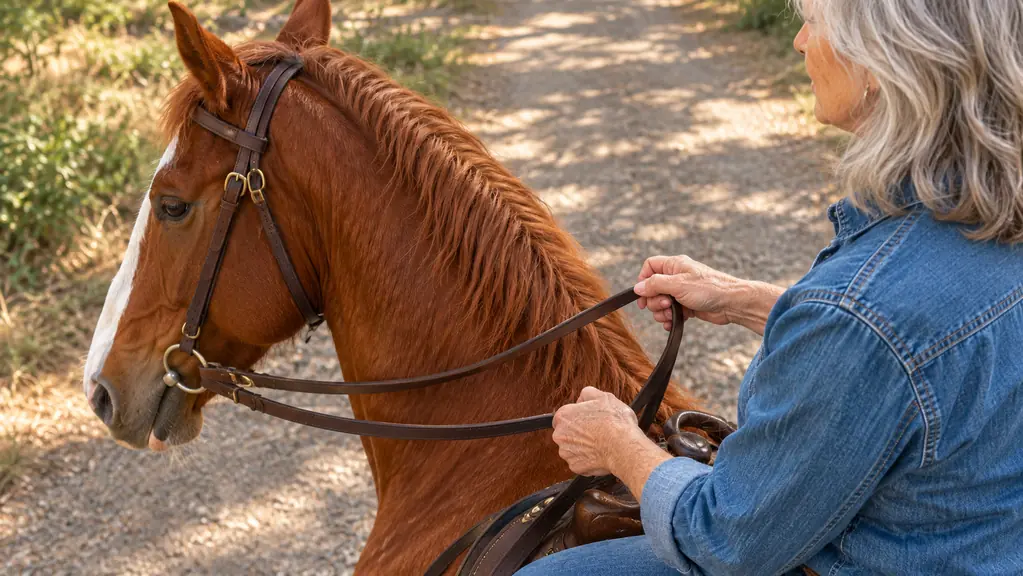
Ranger is a 14-year-old sorrel Quarter Horse gelding, 15.1 hands, about 1,050 pounds, with a white blaze and one white sock on the left hind. He is calm on the trail and a handful leaving the barn. We ride three or four times a week in good weather, about an hour and a half each time, on the Forest Service trails and the gravel roads near home outside Harrison. Once a month I trailer him to a longer ride with friends, and those long days are the ones that used to cost me skin.
I ride Western, trail only. I do not show, I do not compete, and I have no opinion about how these look in a ring. My saddle is an older Western trail saddle I have had for years. The gloves live on a shelf by the tack room door with the rest of my gear, and they get worn for riding and nothing else. I am not going to muck a stall in a pair of riding gloves. When they get stiff with sweat I hand wash them in warm water with a little soap, the way the label says, and set them on the tack room windowsill to air dry. Never in the dryer, never on the truck dashboard on a hot day. That is the whole care routine and it takes five minutes twice a month.
The monthly group rides are where I judge them, because that is where the old problems showed up. Three hours in the saddle, reins in the same place, heat and horse sweat and my own sweat all working on the leather. On those rides the gloves have never once made me think about my hands. That sounds like faint praise. It is not. Gear that you stop noticing is gear that is doing its job.
The worst day I have put them through was a Saturday last July, the long ride out past the creek crossing with Bonnie and two others. It was hot and still, the kind of Arkansas afternoon where the sweat runs down your forearm and into the cuff of a glove, and we were out close to four hours because one of the horses was green and slow on the downhill stretches. By the time we got back to the trailers my shirt was soaked through and the gloves were dark with sweat. I rinsed them in the horse trough, set them on the dash for the drive home, and they were dry and soft by the next morning. That is the test I care about, and they passed it. On that same ride, in 2025, I would have been favoring my right hand for the last hour and hiding it from everybody.
I want to be clear about the before and after, because it is the only reason I am writing this at all. Before the gloves, my hands were the limiting factor on a long ride. I would start shifting my grip, adjusting how the rein lay in my fingers, doing all the little fidgets a person does when something hurts and she is trying not to admit it. After the gloves, I stopped fiddling entirely. That is the short version of the review. Everything below this is just the detail.
Fit: Follow the Chart, Not Your Gut
I measured my hand with the sewing tape I keep for hemming and bought the size the chart pointed to. It was right the first time, which is not something I get to say often about anything ordered off the internet. The cuff is elastic with an adjustable strap and a hook closure, so there is a little to take up or let out at the wrist, and that strap is what keeps the glove from shifting around when my hands get sweaty.
What surprised me was the stretch. The back of the glove is a spandura material that gives, and that give is why they went on snug without pinching. The first week they felt a touch close across the knuckles. By the second week they had settled in and I stopped noticing them. A year on they have not gone sloppy and they have not shrunk in the wash, which is more than I can say for a pair of cotton work gloves I used to own. They are ambidextrous, so when one wears thin first I can swap hands and get more life out of the pair. That has not happened yet, but I like knowing it is there.
I will tell you what I did wrong first, so you do not repeat it. Before I measured anything, I ordered a pair the way I order work gloves, which is to say I guessed. They came, I pulled one on, and it was too big across the palm. The fingers hung past my fingertips, which on a rein is worse than it sounds, because the extra leather bunches up in your fist and gives the rein something to slide against. I sent that pair back and measured properly, and the second pair was right. So get the tape out. It takes two minutes and it saves a return.
One thing worth saying about fit. These are not a loose glove and they are not meant to be. If you like a glove with room to wiggle your fingers, size on the generous side of the chart or look at something else. On a rein, loose is the same thing as slippery, and slippery is what gave me the callus in the first place.
Grip: The Part That Actually Fixed My Problem
The palm is a synthetic grain leather that Heritage Performance Gloves calls Super Grip, and it is breathable, which matters more in an Arkansas July than it sounds. The first thing I noticed was not the grip itself. It was that my hands stopped slipping on the reins once they got damp. Sweat is what turns a leather rein into a rope in your hand, and by the third hour of a summer ride my hands were always wet. With these, the rein stayed where I put it.
The second thing I noticed was the seams, or rather the lack of one where it counts. Heritage Performance Gloves calls it a patented rein cut design. I cannot tell you what is patented about it and I am not going to pretend I know. What I can tell you is that the rein sits in my hand on a smooth surface with no ridge rolling under the ring finger, and that is the difference between finishing a three hour ride comfortable and spending two weeks healing. I have run my thumb along that edge a dozen times looking for the ridge and there is not one.
The outward seams at the critical wear points are double stitched. That is the sort of detail you only appreciate later, when a single line of stitching would have given out in the first summer. Mine have held. I have turned them over more than once expecting to find a pulled thread and have not found one yet.
A year and well over a hundred rides, and the rein has not rubbed me raw once since the week these arrived.
Durability After a Year of Arkansas Weather
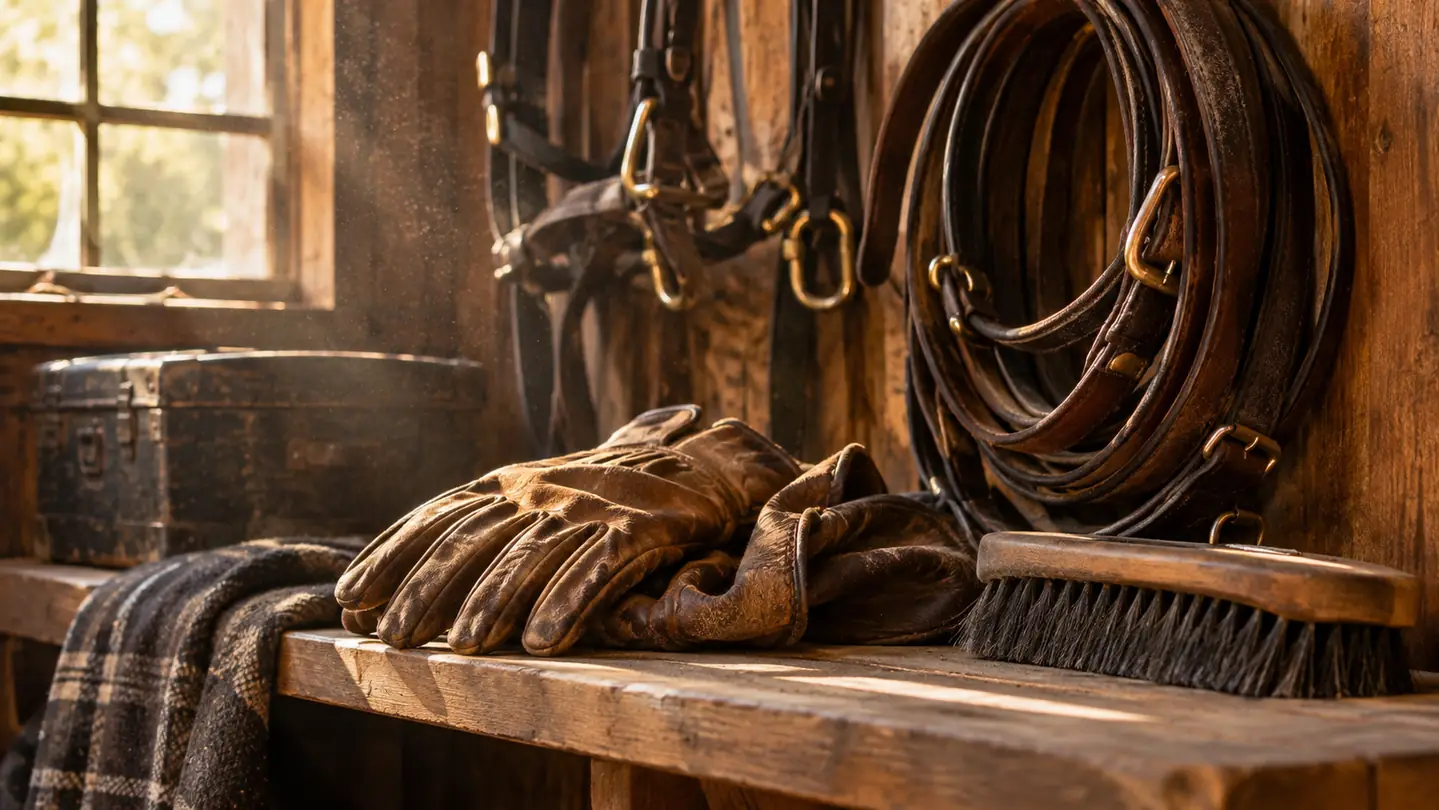
Here is the honest accounting. They are worn but not torn. The palm has darkened where the rein rides and gone a little shiny at the base of the fingers. The stretch panel on the back has some fuzz along the edge of the cuff. No stitching has failed anywhere. There is no hole, not even at the rein finger, which is where I expected them to go first. They have been soaked through in a summer rain and gone stiff overnight in a November cold snap, and both times they came back soft after a hand wash and a day on the windowsill.
The manufacturer warranty is 90 days on material. That ran out long ago and I have not needed it. For a glove that weighs almost nothing and lives on a tack room shelf, that is a fair record. I am hard on gear in a quiet way, meaning I use it every single time rather than saving it for best, and these have taken a year of that without complaint.
The one bit of wear I do watch is the strap. The adjustable strap at the wrist with its hook closure is the part that takes the most handling, since you are opening and closing it every time you put the gloves on, and after a year of twice-a-day use mine is still holding without stretching out. I check it the way I check the stitching on a cinch, out of habit, and so far there is nothing to see. If anything on these goes first, I would expect it to be there.
I will say this plainly, because a review that only lists what held up is not a review. These are not the gloves I would pick to haul hay or run fence wire. The palm is grippy but it is not armor, and the back is a stretch panel, not leather. If you want a glove for rough work around the barn, buy a work glove and keep these for the reins. Mixing the two jobs is how a good pair of riding gloves gets ruined in a single season.
What I Liked
- Thin enough to feel the reins, grippy enough to stop the rub
- The rein sits on a smooth surface with no seam ridge under the fingers
- Stretch back panel and adjustable strap keep them snug without pinching
- Hand washed twice a month for a year with no stitching failure
- Ambidextrous, so a glove that wears thin can swap hands
Where It Falls Short
- Hand wash only, so they never go in the machine
- No warmth at all on a cold morning
- The palm is built for reins, not for barn work
- 90 day material warranty is short for a piece of daily gear
The Things I Don't Love
Hand wash only is a genuine nuisance. In July they get sour fast and I would love to throw them in the machine with the saddle pads. I do not, because the label says not to, and I would rather wash them by hand twice a month than buy a new pair every spring. If you are the sort of person who will not hand wash a glove, be honest with yourself about that before you order, because these will not survive being treated like a work glove.
They are also cold. There is nothing in them for insulation, and on a 35 degree morning in November my fingers are stiff for the first mile. I wear a thin cotton liner under them in cold weather and that takes care of it. The other trade-off is simply that a thin palm is thin. I caught myself grabbing a hay bale in them once and thought better of it halfway through the lift.
Who This Is For
This is for the rider who wants to feel the reins and is tired of paying for that feel in skin. If you ride several times a week, if you take long rides where the rein sits in the same place for hours, if you have ever come home with a raw spot between your fingers, these are worth a look. They suit a Western trail rider who wants a thin, plain glove and does not need it to look like anything in particular. They also suit anyone who, like me, spent years in cotton work gloves without realizing how much feel she was giving up.
Who Should Skip It
Skip them if you want a padded glove, because there is no padding in them. Skip them if you want warmth. Skip them if you will not hand wash, or if you want one pair that does riding and barn work both. And skip them if you are shopping for the show ring, since I cannot tell you a thing about how they look under a judge's eye. I ride trails and gravel roads. That is the whole of what I know.
One year in, still the only gloves I ride in
Follow the size chart, hand wash them, and they will outlast the rein blisters they replaced. Mine are worn but not torn after a full year of trail miles.
Amazon Check Today's Price on Amazon →