
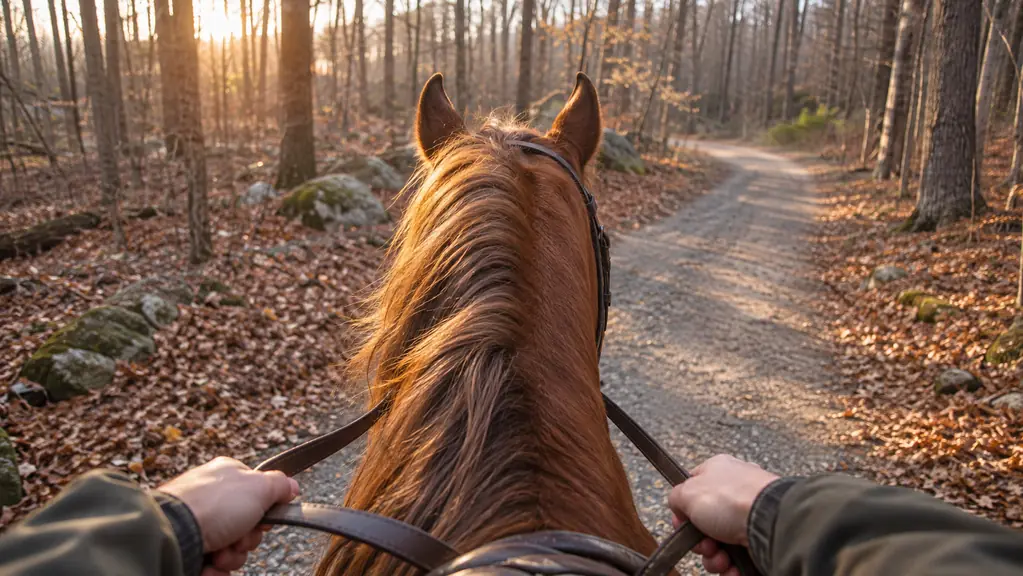
The blisters showed up in July of last year, between the ring finger and the little finger on my right hand, and they came back on every long ride after that. I had been riding bare-handed for years. On a two-hour August ride the reins go slick with sweat and start to slip, so I had tried a pair of thick cotton work gloves. They were worse than nothing. I could not feel the reins through them at all. Ranger would drift toward the ditch and I would not notice until his shoulder was already off the line.
I bought a pair of Heritage Performance Gloves in November 2025, mostly because a friend on our monthly group ride had a pair and I liked the way the seam between the fingers was set. I paid for them myself, the same as everything else hanging in my tack room, and nobody at the company has ever heard of me. That was a year ago. I have worn them on every ride since, three or four rides a week in good weather, an hour and a half at a stretch, on the gravel roads and Forest Service trails out from our place near Harrison, Arkansas. Here is what a year of that has been like.
The Quick Verdict
The best fix I have found for rein blisters on long rides. Thin enough to keep feel of the reins, grippy when hands and leather are both wet, and mine have lasted a full year of steady trail work. The hand wash only rule is the one real chore.
Amazon Check Today's Price →The pair I would buy again before next summer's long rides
Thin leather, a rein seam that stays out of the way, and a cuff that has not gone slack in twelve months. Check the size chart before you order.
Amazon Check Today's Price on Amazon →How I've Used It
My riding is not complicated. I ride Western, trail only, and I have never shown or competed in my life. Ranger is a 14-year-old sorrel Quarter Horse gelding, 15.1 hands and about 1,050 pounds, and he is the only horse I own. Three or four times a week in good weather I saddle up and go out for about an hour and a half. Once a month I trailer him to a longer ride with friends, and those are the days that used to tear my hands up.
The ride that sent me shopping was a Saturday in late July 2025. Bonnie and I trailered out for a long loop, about nine miles with a stop at the creek, and it was one of those Arkansas days where the air just sits on you. By the time we loaded up I had two raw spots on my right hand between the ring finger and the little finger and one matching spot on the left. I had tried wrapping the rein with vet wrap the week before. It helped for about twenty minutes, then it slid and bunched and made things worse. I had also tried a strip of athletic tape across the sore spots on my fingers, which lasted until I sweated through it. Neither of those was a fix. They were ways of getting through the ride.
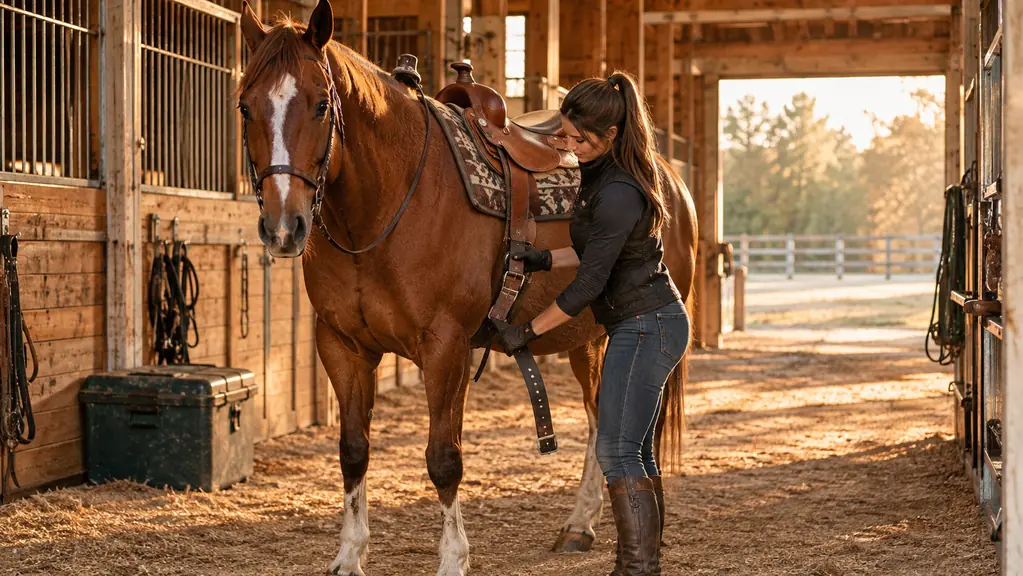
The gloves go on before I pick up the reins and come off when I unsaddle. I do not wear them to groom, to muck, or to throw hay. They are riding gloves and I treat them that way, which is probably part of why they have lasted.
In a year I have put somewhere around 150 rides on them. They have been rained on, sweated through, and hand washed more times than I bothered to count. They have been soaked in creek water when Ranger waded in and I let him. They are worn now. The palm is darker where the reins ride, the edges have gone soft, and there is a little fuzz on the stretch material at the wrist. But nothing has torn and no seam has let go.
What the Rein Cut Actually Does
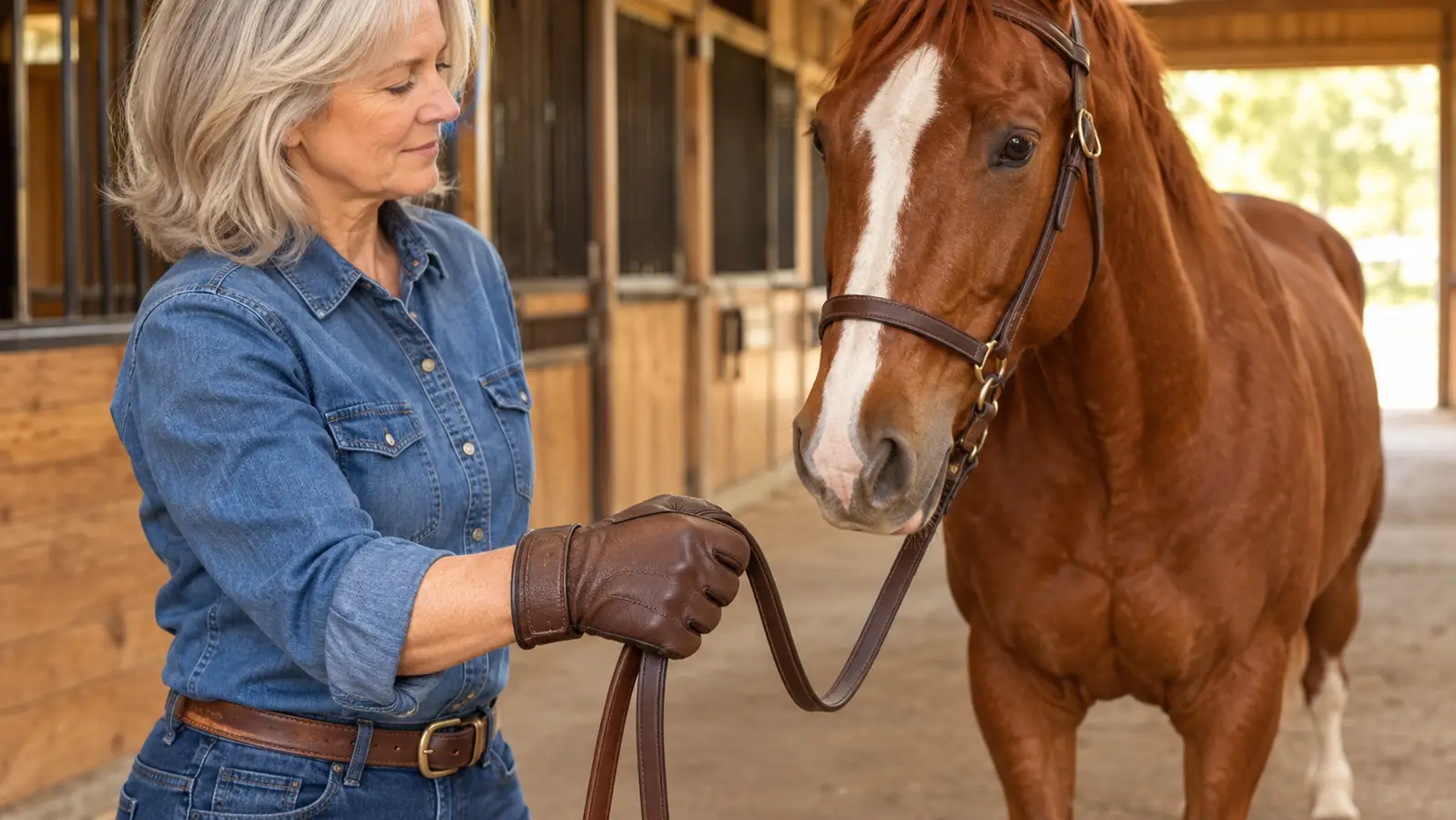
The feature that sold me is the one they call the patented rein cut design. The seam between the fingers does not run where the rein runs. On an ordinary glove the rein sits right down on a stitched ridge, and after an hour that ridge is a hard line pressing into the soft skin between your fingers. That is exactly where my blisters were. Move the seam and the problem mostly goes away. It sounds like a small thing to study in a listing photo. It was the whole reason I bought these.
The palm side is what the listing calls Super Grip synthetic grain leather. I cannot tell you anything about the chemistry of it and I would not pretend to. I can tell you that on a hot afternoon, when my hands are wet and the reins are wet, these still hold. Bare-handed I was re-gripping constantly. In the cotton work gloves I was squeezing harder than I needed to because I could not feel anything, and my forearms ached by the time I got back to the barn. Neither of those things happens now.
The back of the hand is a stretch spandura material, and that is the part that makes them feel like almost nothing. It is the reason I can still feel the reins through them, which was the entire problem with the cotton gloves I had been using. A glove that deadens your hands is not safer. It just makes you late.
I keep a pair of thick cotton work gloves in the trailer for loading and for anything with hay string. Twice this year I put those on by mistake because I could not find the Heritage pair in my coat pocket, and the difference is not subtle. Half a mile down the road I am squeezing the rein instead of holding it, and by the time I notice I have already got a cramp started in my right forearm. Ranger is herd-sour leaving the barn and he leans on the bit for the first quarter mile, and that is exactly when I need my hands to be quiet.
Fit, Cuff, and the Strap I Actually Use
I followed the size chart. That is the whole of my advice on sizing: measure your hand, look at the chart, and do not guess because you have always worn a certain size in work gloves. I keep a cloth sewing tape in the box with my thread, so I measured across my palm and around my hand the way the chart says and ordered from that. Mine fit snug across the knuckles from the first ride and have not stretched out of shape in a year.
The cuff is elastic with an adjustable strap and a hook closure. I pull the strap snug before I mount and then I forget about it. In twelve months that elastic has stayed elastic, which surprises me. On cheap gloves the cuff is the first thing to go. It goes slack, the glove starts twisting on your hand every time you take up the reins, and you are done with them.
They are ambidextrous, which sounds like a small thing until you are saddling in a hurry and cannot find the right and the left. I have pulled them on wrong-handed more than once and did not notice until I looked down at my hands on the reins. The pair weighs 2.4 ounces together, so they live in my coat pocket on cool mornings without dragging it down.
One thing I did not expect was the strap outlasting everything else. I have a habit of snugging a cuff down hard because I hate a glove that twists, and on other gloves that means the strap stretches out by the end of a season and stops holding where you set it. These have not done that. The hook closure still catches where it did when they came out of the package. It is a small piece of hardware and it is the one I expected to fail first.
A Year of Wear: What Held
The double stitching on the outward seams has held. That is the seam that takes the strain when you are pulling a cinch or leading a horse that has decided he would rather be back at the barn. Ranger gets girthy if I rush the cinch, and I have had to hold him steady with a gloved hand more than once. No stitch has popped.
What has changed is how they look. The palm is darker where the reins ride. The edges have softened up. The strap still sits where it did when they were new. The spandura at the wrist has a little pilling on it. I would call them broken in, not worn out, and that is a different thing.
The listing gives a 90 day material warranty. I am nine months past that and have not needed it, so I cannot tell you anything useful about how they handle a claim. What I can tell you is that I fully expected to be buying a new pair by this fall, and I am not.
The place I expected wear and did not get it is the spot between the thumb and the palm where the rein actually rides, hour after hour. On my old work gloves that spot went thin and shiny and then split along a crease. The Heritage pair has a smooth worn patch there and nothing more. I have run my thumb over it a dozen times looking for a thin spot and have not found one.
Summer Sweat and the Hand Wash Rule
The care instruction says hand wash only, and that is not a suggestion. I wash mine in a sink of cool water with a little mild soap, work the palms together, rinse them, and set them on the tack room windowsill to air dry. I do not set them near the wood stove and I do not put them in the machine. A year of that and they do not smell like anything but leather.
In July and August I am washing them about every two weeks, because Ranger sweats heavily in our summers and so do I, and a glove that stays damp goes sour fast. It is a chore. If you are the kind of person who throws gear in the washer and hopes for the best, this pair will not survive you, and that is a fair thing to know before you order.
One more note on summer. A wet leather glove will stiffen as it dries if you leave it wadded up. I smooth mine flat on the sill and they come back soft every time. It takes thirty seconds.
There was one stretch in July where I rode four days running and the gloves never fully dried in between. They went stiff at the fingers and I could feel it when I picked up the reins, like holding a folded paper bag. I washed them, laid them flat on the windowsill in the afternoon sun, and by the next morning they were soft again. I have not had to do anything beyond that. No conditioner, no oil. I would be careful with anything that softens leather anyway, because a glove that goes limp loses the feel you bought it for in the first place.
Where They Fall Short
They are not warm gloves. In January I either wear a thin liner underneath or I accept cold fingers for the first twenty minutes. The leather is thin by design and there is no insulation in it anywhere. For our Arkansas winters that is fine. If you ride where it stays below freezing, plan for it and do not blame the glove.
The other limit is that they are riding gloves and only riding gloves. I tried to use them once for fence work and they are not built for wire and staples. That is not a fault. It is just what they are, and I would rather have a good riding glove than a glove that is mediocre at five jobs.
The last thing is the upkeep. I am not going to tell you these are fussy, because they are not, but they do ask you to pay attention. A glove that goes in the wash machine is a glove you never think about. This one you think about twice a month in the summer and once in a while after a wet ride. I have decided that is worth it. Not everybody will.
What I Liked
- Rein seam sits off the path of the rein, which ended the blisters I used to get between my fingers on long rides
- Grip holds when hands and reins are both wet, so I stopped re-gripping constantly on hot days
- Thin enough that I can feel the reins, unlike the cotton work gloves I used before
- Double stitched outward seams have held through a year of steady trail use
- Elastic cuff and adjustable hook strap have not gone slack in twelve months
- Ambidextrous, so a lost glove does not mean a lost pair
Where It Falls Short
- Hand wash only, and in summer that means every couple of weeks
- No insulation, so it is a three-season glove for me
- Not built for fence work, hay, or anything with wire
- A year in, the leather is darker and the stretch material has pilled
Twelve months, somewhere around 150 rides, one pair, and I have not had a rein blister since the first week I wore them.
Who This Is For
This is for the rider who spends real hours with reins in their hands and pays for it. Long trail days, sweaty hands, a horse that pulls or drifts, rein leather that gets slick by the second hour. If you have ever come back to the trailer with raw spots between your fingers, this is the fix I found and it worked for me.
It also suits anyone who wants to keep feel of the reins. I have ridden with people who like a heavy roping glove, and that is a different job. For plain trail riding where you want to know what your horse is doing through your hands, thin is better, and these are thin. The Heritage pair has been on my hands for every mile I have ridden in the last year, and I have not once wished I had something heavier.
Who Should Skip It
Skip them if you want one glove for everything. If you are feeding, fixing fence, dragging hay and riding, buy a work glove and accept the blisters, or buy both. These are for the saddle.
Skip them too if you ride in serious cold, or if hand washing is a dealbreaker. There is no shame in either. I would just rather tell you now than have you find out in February.
One year in, mine are still in the barn and still on my hands
Measure your hand against the size chart, order once, and wash them by hand. That is the whole method. They are the only piece of gear I have bought in the last year that I have not thought about replacing.
Amazon Check Today's Price on Amazon →